
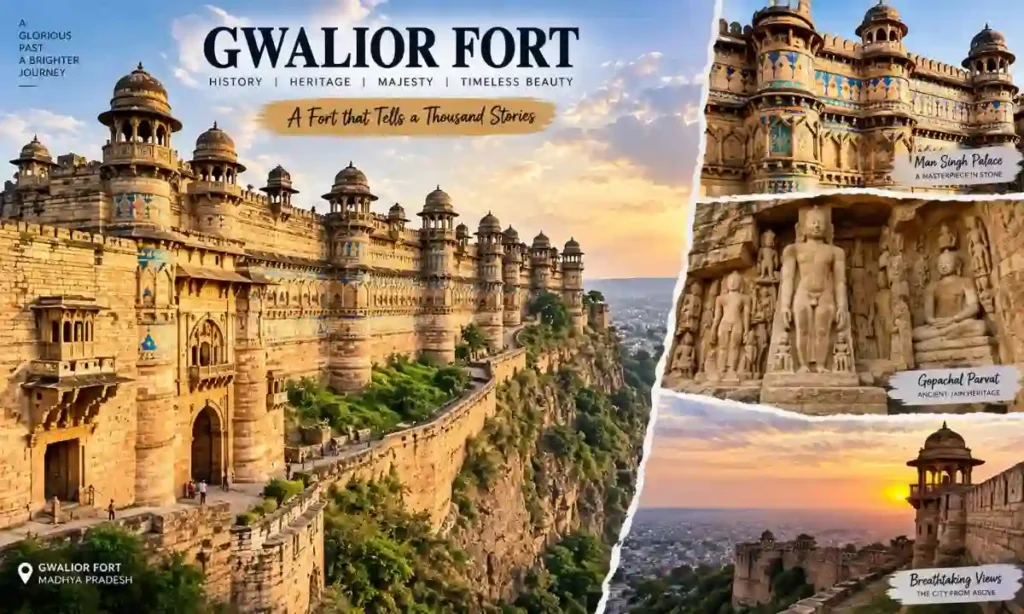
There are several things to do in Gwalior besides exploring its famous fort. Gwalior is a city in the state of Madhya Pradesh and a place of magnificent forts, royal palaces, ancient temples, museums, classical music heritage, gardens, and local food. Your trip can begin at Gwalior Fort, continue at palaces and temples within the complex, Jai Vilas Palace, Gopachal Parvat and its rock-cut sculptures of Jain statues, and end with musical heritage of Tansen.
Gwalior can be a perfect destination for sightseeing and relaxing holidays, combining museums, temples, bazaars, local cuisine, visiting a park or dam, trying a traditional sweet, and other attractions. Regardless of whether you plan to stay in Gwalior for one day, two days, or even a weekend, this guide will help you to discover what to see in Gwalior and do there, which places to visit, things to do, food to try, shopping ideas, itineraries, attractions near Gwalior, and other helpful information.
Best Things to Do in Gwalior
Gwalior has enough tourist attractions to satisfy different types of tourists. Those who love history can spend much time in Gwalior Fort, while families can combine monuments with visits to zoo and parks. Music fans can explore Tansen and related monuments and museums.
| Things to Do | Category | Suggested Time | Best For |
| Explore Gwalior Fort | Heritage | 3–4 hours | History lovers |
| Visit Man Singh Palace | Palace | 45–60 minutes | Architecture |
| Explore Gopachal Parvat | Jain Heritage | 45–60 minutes | Art and history |
| See Teli Ka Mandir | Temple | 30–45 minutes | Architecture |
| Visit Sas-Bahu Temple | Heritage | 30–45 minutes | History |
| Visit Jai Vilas Palace | Palace & Museum | 1.5–2 hours | Royal history |
| Explore Gujari Mahal | Museum | 1–2 hours | Archaeology |
| Visit Moti Mahal | Heritage | 30–60 minutes | Architecture |
| See Tansen’s Tomb | Music Heritage | 30–45 minutes | Music lovers |
| Visit Mohammad Ghaus Tomb | Heritage | 30–45 minutes | History |
| Explore Sarod Ghar | Music Museum | Around 1 hour | Culture |
| Visit Sun Temple | Religious Site | 30–60 minutes | Families |
| Visit Gurudwara Data Bandi Chhod | Religious Site | 30–60 minutes | Spirituality |
| Visit Gwalior Zoo | Wildlife | 2–3 hours | Families |
| Relax at Tigra Dam | Nature | 2–3 hours | Leisure |
| Visit Italian Garden | Garden | 1 hour | Relaxation |
| See Scindia Chhatris | Heritage | 30–60 minutes | Architecture |
| Visit Rani Lakshmi Bai Samadhi | History | 30–45 minutes | History |
| Explore Maharaj Bada | Shopping | 1–2 hours | Shopping & food |
| Watch the Fort Light and Sound Show | Cultural Experience | Around 1 hour | Evening activity |
Explore Gwalior Fort
Gwalior Fort is one of the main attractions of the city’s heritage. As it is located on a steep sandstone hill dominating the city, this heritage place should be the first attraction to be included into your Gwalior itinerary.
Historical monuments and structures, battles and imprisonments – all these events happened within the territory of Gwalior Fort during its long history.
However, unlike other historic monuments and places, Gwalior Fort is a complex of different attractions. Among its highlights are Man Singh Palace, Sas-Bahu Temple, Teli Ka Mandir, Chaturbhuj Temple, Jain sculptures and others.
Gwalior Fort is included in the Tentative List of World Heritage Sites of India, UNESCO.
| Gwalior Fort Information | Details |
| Location | Gwalior, Madhya Pradesh |
| Type | Historic hill fort |
| Recommended Time | 3–4 hours |
| Best For | History, architecture and photography |
| Ideal Time | Morning or late afternoon |
| Nearby Highlights | Man Singh Palace, Sas-Bahu Temple, Teli Ka Mandir and Gopachal |
Explore Man Singh Palace
Man Singh Palace is one of the most spectacular buildings located within the territory of Gwalior Fort. It is known for colorful decorative tiles and architectural elements, including animal motifs.
Also, Man Singh Palace is called Chit Mandir, which means Painted Palace. It is one of the examples of medieval architecture, so it would be nice to look closer at the exterior design and decorations of the palace and not just treat it as one more photo spot.
Discover Gopachal Parvat
Gopachal Parvat is one of the most spectacular heritage attractions of Gwalior. Rock-cut sculptures of Tirthankaras are carved into the sandstone rocks of the territory near Gwalior Fort.
This unique and amazing example of historic rock-cut sculptures can be interesting for the tourists who are fond of archeology, religion, sculpture, and photography.
As Gopachal Parvat is situated near Gwalior Fort, it is quite easy to explore it during your heritage tour.
See Teli Ka Mandir
Teli Ka Mandir is situated within Gwalior Fort and known for its unusual architecture. This is one of the tallest buildings within the fort complex and contains elements of different architectural styles.
Therefore, Teli Ka Mandir is one of the most interesting structures of the fort.
Visit Sas-Bahu Temple
Sas-Bahu Temple is one of the attractions within Gwalior Fort. However, the name is given to the complex of two temples, despite the fact that the real name of this complex is Sahastrabahu.
The larger temple is devoted to Lord Vishnu, while the smaller one – to Lord Shiva. Both temples have rich stone carvings and architectural ornamentations.
As this complex of temples is situated within Gwalior Fort territory, it is not necessary to make a separate trip to it.
Explore Chaturbhuj Temple
Chaturbhuj Temple is another historic monument connected with Gwalior Fort. The temple is particularly interesting due to the connection of its architecture with Gwalior Fort.
Exploring Gwalior Fort, you can visit Chaturbhuj Temple with other temples and palaces situated within it, without making an additional trip to it.
Visit Jai Vilas Palace and Scindia Museum
While visiting Gwalior Fort is the best way to get acquainted with Gwalior’s history, Jai Vilas Palace will give you an opportunity to immerse yourself in the history of its rulers. The palace is the example of royal architecture, interiors, historic furniture, and objects related to Scindia dynasty.
Twenty-five rooms of Jai Vilas Palace have been transformed into the museum of the history of Gwalior. Grand Durbar Hall is one of its highlights with huge chandeliers, decorated ceiling, carpets, furniture, and other royal features.
| Jai Vilas Palace | Details |
| Type | Palace and museum |
| Location | Gwalior |
| Suggested Time | 1.5–2 hours |
| Best For | Royal history and architecture |
| Main Experience | Museum collections and palace interiors |
The palace has been constructed in Tuscan and Corinthian architectural styles, so it would be interesting for tourists who are interested in royal history of Gwalior.
Visit Gujari Mahal Archaeological Museum
Gujari Mahal is the construction of King Man Singh devoted to his wife Mrignayani. Now this building is connected with the museum of historical objects, sculptures, and archaeological findings connected with the region.
Gujari Mahal is a great addition to the sightseeing of Gwalior Fort for the tourists who are interested in museums and ancient history of India.
Explore Moti Mahal
Moti Mahal is the historic monument known for its decorations, murals, mosaics, and paintings devoted to Indian classical music themes such as Ragas and Raginis.
In addition to the fort, temple, and palace, this monument will give you another view of Gwalior’s architectural and cultural heritage. It is a good place to spend some time if you have free minutes between other attractions.
While visiting Gwalior, you can spend some time looking at the decoration of the palace and not only at the building itself.
Visit Tansen’s Tomb
The connection of Gwalior with Indian classical music is one of the main cultural features of this city. The tomb of the celebrated musician Tansen, who was connected with the court of Emperor Akbar, can be found in Gwalior.
This relatively short visit is particularly interesting for tourists who are interested in Gwalior’s music heritage.
The connection of Gwalior with Tansen is continued in its annual musical traditions and festivals.
Visit the Tomb of Mohammad Ghaus
The Tomb of Mohammad Ghaus is one of the main historic monuments near Tansen’s Tomb. Sandstone monument has rich architectural elements and stone latticework.
Mohammad Ghaus was the prominent Sufi saint and scholar of the Mughal period. Thus, this monument will show you the architectural style of Gwalior’s past.
As the two tombs are located near each other, you can visit both of them during one heritage tour.
Explore Sarod Ghar
Sarod Ghar is the museum connected with Indian classical music and musical heritage of Ustad Hafiz Ali Khan. The museum contains musical instruments, photographs, and other objects connected with previous generations of musicians.
This attraction will be particularly interesting for tourists who want to explore Gwalior’s cultural heritage beyond monuments and palaces.
While visiting this attraction, you can discover more about Indian classical music.
Visit the Sun Temple
Sun Temple, or Surya Mandir, is one of Gwalior’s most famous temple attractions. This temple devoted to the Sun God is remarkable for its architectural design, based on the famous Sun Temple tradition of India.
Contrary to Gwalior Fort, the Sun Temple can be explored quite fast and, thus, can be included into a busy itinerary as a family attraction or as a part of a route covering other city attractions.
Visit Gurudwara Data Bandi Chhod Qilla
Gurudwara Data Bandi Chhod Qilla is one of the most important Sikh religious and historical sites of Gwalior. The place has deep connections with Guru Hargobind Sahib and Gwalior Fort.
While visiting this place, keep in mind the rules of the site and respect the spirit of the religion.
Explore Scindia Chhatris
Chhatris of Scindia Dynasty are the memorial structures erected in memory of members of Scindia family. These monuments with domes, pavilions, and rich architectural details will be interesting for tourists who are interested in historic structures.
As this type of monuments is different from other attractions in Gwalior, this place will enrich your heritage tour with a new attraction.
Visit Rani Lakshmi Bai Samadhi
Samadhi of Rani Lakshmi Bai is another historically important site of Gwalior. It is connected with the famous warrior queen Rani Lakshmi Bai, who was one of the heroes of the uprising of 1857.
Besides the monument, you can also see a statue of the Rani and other places related to the events.
Visit this site together with other historically important attractions in Gwalior.
Relax at Italian Garden
Italian Garden is the attraction that can give you a rest after exploring many large monuments of Gwalior.
It will be especially interesting for families and tourists who want to relax after many museums and historical monuments.
Spend Time at Tigra Dam
Tigra Dam is an attraction near Gwalior, giving you a rest after exploring historic monuments. The reservoir is the main source of drinking water for Gwalior.
The reservoir can give you a change of scenery and will be interesting for visiting it for the purposes of bird watching, boating, or having a picnic.
| Tigra Dam | Details |
| Type | Reservoir and scenic destination |
| Best For | Families, leisure and nature |
| Activities | Boating, sightseeing and bird watching |
| Suggested Time | 2–3 hours |
| Location | Near Gwalior |
Because outdoor activities can depend on weather and local operating conditions, check availability before planning your trip around boating.
Visit Gwalior Zoo
Gwalior Zoo, also known as Gandhi Zoological Park, is a family-friendly attraction and a useful alternative to a day filled entirely with monuments.
The zoo was established in the early twentieth century and forms part of the Phool Bagh area. Families travelling with children can combine it with other nearby attractions.
Allow a couple of hours if you want to explore the zoo without rushing.
Explore Baija Taal
Baija Taal is another local leisure attraction that can be considered when planning a broader Gwalior itinerary. It provides an alternative to the city’s major monuments and can be useful for travellers who want to explore more of the city’s local character.
Its suitability for a visit can depend on the season and current local conditions.
Visit Katora Taal
Katora Taal is another local attraction that can be considered alongside Gwalior’s parks and leisure destinations.
It is better suited to travellers who have additional time after covering the city’s major heritage attractions rather than those visiting Gwalior for only one day.
Things to Do in Gwalior at Night
Gwalior’s evening experience is more focused on culture, food and relaxed sightseeing than on a large nightlife scene.
Some options include:
- Watching the fort’s sound and light show
- Trying local food
- Exploring suitable evening markets
- Visiting well-known public areas
- Enjoying an evening walk where appropriate
- Spending time at local restaurants or cafes
Check the current operating schedule of attractions before planning an evening around them.
Watch the Gwalior Fort Light and Sound Show
The Gwalior Fort sound and light show is one of the city’s notable evening experiences. The programme presents stories connected with the fort and its history using lighting, narration and music.
Current tourism information lists separate Hindi and English shows, but timings and ticket prices can change, so visitors should confirm the latest schedule before travelling.
| Show Information | Details |
| Venue | Gwalior Fort |
| Type | Sound and light presentation |
| Languages | Hindi and English sessions |
| Best For | History and evening entertainment |
| Timing | Check current schedule before visit |
Things to Do in Gwalior with Family
Gwalior offers enough variety for a family trip. Instead of spending the entire day inside monuments, combine heritage attractions with outdoor and recreational experiences.
| Activity | Why Families May Enjoy It |
| Gwalior Fort | History and architecture |
| Jai Vilas Palace | Royal interiors |
| Gwalior Zoo | Wildlife |
| Sun Temple | Architecture and culture |
| Tigra Dam | Nature and leisure |
| Italian Garden | Relaxation |
| Local Food Tour | Regional flavours |
For younger children, plan breaks between long walking sessions, especially when visiting the fort.
Things to Do in Gwalior for Couples
Couples can combine historical sightseeing with relaxed experiences. A palace visit, heritage photography, local food, an evening cultural activity and a visit to a scenic destination can make the trip more varied.
A simple couple-friendly plan could include:
- Gwalior Fort
- Jai Vilas Palace
- Local food
- Evening sound and light show
- Italian Garden
- Tigra Dam
Choose outdoor activities according to the weather and current local conditions.
Free Things to Do in Gwalior
A Gwalior trip does not have to be expensive. Some religious sites, public areas and selected heritage locations can be explored without major admission costs, although access rules vary.
Budget-friendly ideas include:
- Visiting selected temples
- Exploring public areas around historic monuments
- Seeing Jain sculptures at Gopachal
- Visiting religious sites
- Exploring local markets
- Walking through suitable historic neighbourhoods
- Enjoying the city’s architecture and street atmosphere
Always check the latest entry rules for a specific attraction before assuming that an area is completely free.
Best Places to Visit Near Gwalior
Gwalior is also a useful base for exploring several nearby heritage and natural destinations.
- Bateshwar Group of Temples: Bateshwar is known for a large cluster of sandstone temples in the Morena region. The site is especially interesting for travellers who enjoy ancient architecture, archaeology and photography.
- Padavali: Padavali is a historic destination known for its fortified setting and temple architecture. It can be combined with Mitawali and Bateshwar to create a heritage-focused day trip.
- Mitawali: Mitawali, also called Mitaoli, is famous for its circular temple design and historical architecture. Its unusual layout makes it one of the more distinctive places to visit around Gwalior.
- National Chambal Sanctuary: The National Chambal Sanctuary is an option for nature and wildlife enthusiasts. The protected area is associated with species such as the gharial, Gangetic river dolphin and several species of turtles. A sanctuary visit requires more planning than a city attraction because travel time, weather and activity availability need to be considered.
- Datia: Datia is another historical destination that can be considered when planning a longer Madhya Pradesh itinerary. Its palace and religious heritage make it suitable for travellers interested in architecture and history.
Best Food to Try in Gwalior
Food is an important part of the Gwalior experience. The city is particularly associated with Gajak, a traditional sweet made using ingredients such as sesame and jaggery.
Other local eating experiences include kachori, breakfast snacks, sweets and North Indian dishes.
- Gajak: Gajak is one of the best-known foods associated with Gwalior and the surrounding region. It is especially popular during the colder months and comes in different varieties.
- Bahadura Ke Laddu: Traditional sweets such as laddus can also be part of a Gwalior food experience. Local sweet shops are worth exploring if you want to try regional flavours.
- Kachori and Local Breakfast: A local breakfast featuring kachori and other Indian snacks can be an easy way to experience the city’s everyday food culture.
- Indian Coffee House Experience: For travellers looking for a relaxed meal or coffee break, historic-style eateries and established local food spots can add a different dimension to the trip.
Shopping in Gwalior
Shopping is another activity that can be added after sightseeing. Gwalior’s markets offer traditional foods, handicrafts, textiles and local products.
- Maharaj Bada: Maharaj Bada is one of Gwalior’s important commercial areas and can be included in an evening shopping itinerary.
- Gajak: Packaged Gajak is one of the most recognizable food souvenirs from Gwalior.
- Batto Bai Dolls: Traditional dolls and local handicrafts can make distinctive souvenirs for travellers interested in regional crafts.
- Gwalior Carpets: Local carpet and textile traditions can also be explored when shopping for traditional products.
- Mrignayani: Government-supported handicraft and handloom outlets can be useful for travellers looking for authentic regional products.
Best Time to Visit Gwalior
Gwalior can be visited throughout the year, but the cooler months are generally more comfortable for extensive sightseeing.
October to March is a practical period for exploring forts, temples and outdoor attractions because daytime conditions are usually more suitable for walking.
| Season | General Conditions | Suitable For |
| October–March | Cooler and comfortable | Full sightseeing |
| April–June | Hot | Early morning and evening visits |
| July–September | Monsoon | Selected outdoor activities |
If you visit during summer, schedule the longest outdoor activities in the morning and avoid unnecessary afternoon walking.
Gwalior Tourist Attractions: Timings and Entry Fees
Timings and ticket prices can change, particularly for museums, zoos and special programmes. Therefore, travellers should verify current information immediately before their visit.
| Attraction | Information to Check |
| Gwalior Fort | Opening hours and entry arrangements |
| Jai Vilas Palace | Museum timings and ticket |
| Gujari Mahal | Museum timings and admission |
| Gwalior Zoo | Opening hours and weekly closure |
| Sun Temple | Current opening hours |
| Sarod Ghar | Museum schedule |
| Sound & Light Show | Current show time and ticket |
| Tigra Dam | Boating availability and local conditions |
One-Day Gwalior Itinerary
If you only have one day, focus on the most important attractions rather than trying to see the entire city.
| Time | Suggested Plan |
| 7:30–8:00 AM | Start sightseeing |
| 8:00–11:30 AM | Gwalior Fort and major structures |
| 11:30 AM–12:30 PM | Gopachal and nearby heritage sites |
| 1:00 PM | Lunch |
| 2:00–4:00 PM | Jai Vilas Palace |
| 4:30–5:30 PM | Tansen and Mohammad Ghaus area |
| Evening | Local food or sound and light show |
The exact schedule should be adjusted according to opening hours, weather and travel time.
Two-Day Gwalior Itinerary
Day 1
Begin with Gwalior Fort and spend several hours exploring Man Singh Palace, Gopachal, Teli Ka Mandir, Sas-Bahu Temple and other important structures.
After lunch, visit Jai Vilas Palace and its museum. In the evening, enjoy local food or attend the fort’s sound and light programme if the schedule matches your visit.
Day 2
Start with Tansen’s Tomb and Mohammad Ghaus Tomb, followed by Sarod Ghar or another museum. Visit the Sun Temple and other city attractions later in the day.
If you prefer nature, replace some city sightseeing with Tigra Dam. If you have already covered the main attractions, use the second afternoon for shopping at Maharaj Bada.
Three-Day Gwalior Itinerary
A three-day trip gives you enough time to explore the city without rushing.
Day 1: Fort and Heritage
- Gwalior Fort
- Man Singh Palace
- Gopachal Parvat
- Teli Ka Mandir
- Sas-Bahu Temple
- Evening sound and light show
Day 2: Palace and Culture
- Jai Vilas Palace
- Gujari Mahal
- Moti Mahal
- Tansen’s Tomb
- Mohammad Ghaus Tomb
- Sarod Ghar
- Local food and shopping
Day 3: Nature or Nearby Heritage
Choose between:
- Tigra Dam
- Gwalior Zoo
- Italian Garden
- Bateshwar
- Padavali
- Mitawali
How to Reach Gwalior
Gwalior is connected by air, rail and road, making it accessible from several major cities.
- By Air: Gwalior Airport serves the city, although flight routes and schedules can change. Check the latest flight availability before booking.
- By Train: Gwalior is an important railway destination with connections to several major cities in India. Train travel is a practical option for many visitors.
- By Road: Gwalior has road connections with major cities in Madhya Pradesh and neighbouring states. Road travel can be especially useful if you plan to visit nearby heritage destinations during the same trip.
Local Transportation in Gwalior
Once you reach Gwalior, you can use local transport such as auto-rickshaws, taxis and app-based or private cab services where available.
For a sightseeing-heavy itinerary, a full-day cab can be convenient because attractions are spread across different parts of the city.
For budget travel, compare local transport options and confirm fares before beginning longer journeys.
Where to Stay in Gwalior
Gwalior has accommodation options for different budgets.
- Budget Hotels: Budget accommodation works well for backpackers, solo travellers and visitors who plan to spend most of their day sightseeing.
- Mid-Range Hotels: Mid-range properties can be a good option for families and couples who want more comfort without choosing a luxury property.
- Luxury Hotels: Luxury accommodation is suitable for travellers looking for premium rooms, better facilities and a more relaxed stay.
Best Area for Sightseeing
When choosing accommodation, consider how close the property is to your planned attractions, railway station and major roads. A centrally located property can reduce daily travel time.
Gwalior Trip Budget
Total expenses of your trip to Gwalior depend on accommodation, food, local transport, and paid attractions that you visit.
| Expense | Budget Approach | Mid-Range Approach |
| Accommodation | Budget hotel | Mid-range hotel |
| Food | Local eateries | Restaurants |
| Local Transport | Auto/public options | Cab |
| Attractions | Selected paid sites | More paid attractions |
| Shopping | Limited souvenirs | Handicrafts and local products |
Travel Tips for Gwalior
- Wear comfortable shoes because several attractions involve walking.
- Start fort sightseeing early during warmer months.
- Carry drinking water for longer outdoor visits.
- Check attraction timings before leaving your hotel.
- Verify ticket prices before visiting paid attractions.
- Keep breaks between major monuments.
- Follow photography rules at museums and religious sites.
- Dress respectfully at temples and religious places.
- Confirm local transport fares before starting a journey.
- Check weather conditions before visiting Tigra Dam or nearby destinations.
- Keep extra time for traffic and local transportation.
- Do not try to cover every attraction in one day.
- Carry basic sun protection during summer.
- Keep digital and offline copies of important travel information.
How Many Days Are Enough for Gwalior?
Two days are enough for first-time visitors who want to see all the main attractions in Gwalior.
The sights of Gwalior can be seen in one day provided the itinerary is well thought out.
Three days would be enough to visit museums, try the cuisine, go shopping, visit Tigra Dam and nearby heritage destinations such as Bateshwar, Padavali, and Mitawali.
What Is Gwalior Famous For?
Gwalior is known for its historical fort, royal buildings, temples, museums and classical music heritage.
Gwalior is associated first of all with the historic fort, royal palaces, temples, Tansen and the long-lasting tradition of classical music. The heritage destinations located close by also make the city an attractive starting point for the exploration of the surrounding area.
Is Gwalior Worth Visiting?
Gwalior is a good destination for people interested in history, architecture, museums, classical music and cultural tourism.
There are many things to see in Gwalior in one itinerary without being too exhausting. You can climb up a hill fort in the morning, visit a royal palace in the afternoon, explore music heritage later and end the day either with a meal or a cultural program.
Tigra Dam or other nearby heritage destination can only add to the diversity of your itinerary.
FAQs
What are the best things to do in Gwalior?
The best things to do include exploring Gwalior Fort, visiting Jai Vilas Palace, seeing Man Singh Palace, Gopachal Parvat, Teli Ka Mandir and Sas-Bahu Temple, exploring museums, discovering Tansen’s musical heritage, visiting Tigra Dam and trying local food.
How many days are enough for Gwalior?
Two days are suitable for seeing the main attractions comfortably. Three days are better if you want to include nearby heritage destinations and nature spots.
What is Gwalior famous for?
Gwalior is famous for its historic fort, royal palaces, temples, museums and strong association with Indian classical music and Tansen.
Is Gwalior Fort worth visiting?
Yes, Gwalior Fort is one of the central attractions of the city and contains several important palaces, temples, sculptures and historic structures.
What can I do in Gwalior at night?
You can watch the fort’s sound and light show when available, explore local food options, visit suitable evening markets and enjoy a relaxed evening around the city.
What are the best places near Gwalior?
Bateshwar, Padavali, Mitawali and the National Chambal Sanctuary are among the places that can be considered for trips from Gwalior.
Conclusion
Unlike many other cities with just one fort, Gwalior can offer much more. There are royal buildings, temples, archaeological museums, Jain sculptures, classical music heritage, gardens, local cuisine and nearby excursions which allow travellers to personalize their itinerary.
For a short stay, the sights of Gwalior can include mainly the historic fort and palace with Tansen’s tomb, Gujari Mahal, Gopachal Parvat, Moti Mahal and temples being the optional additions. Travellers who have more time at hand can also visit Tigra Dam, Gwalior Zoo, local markets and nearby heritage destinations such as Bateshwar, Padavali and Mitawali.
Depending on the time you have for visiting Gwalior, planning of the sights beforehand will save your time spent between the attractions.
Also Read About: Things to Do in Narkanda: 20 Best Places & Activities for an Unforgettable Himachal Trip