
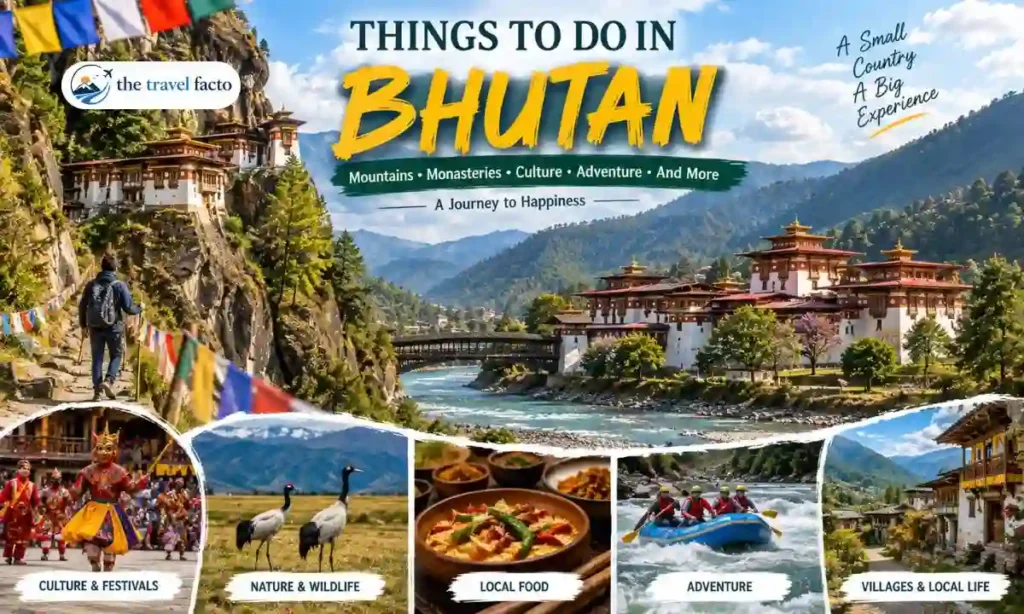
Travel in Bhutan is about much more than sightseeing. The Himalayan country offers a great variety of experiences including ancient monasteries, impressive dzongs, green valleys, mountain passes, local food and adventure. You may spend one day hiking up to the famous Tiger’s Nest in Paro, another exploring the history of Punakha and yet another enjoying the forests and open landscapes of Phobjikha Valley. The official tourism information of Bhutan describes various opportunities starting from archery, traditional crafts and ending with trekking, bird watching and hot stone baths.
This travel guide aims to describe the key things to do in Bhutan in order to help you better understand the options you have and include the most interesting experiences in your travel plans.
Hike to Tiger’s Nest Monastery in Paro
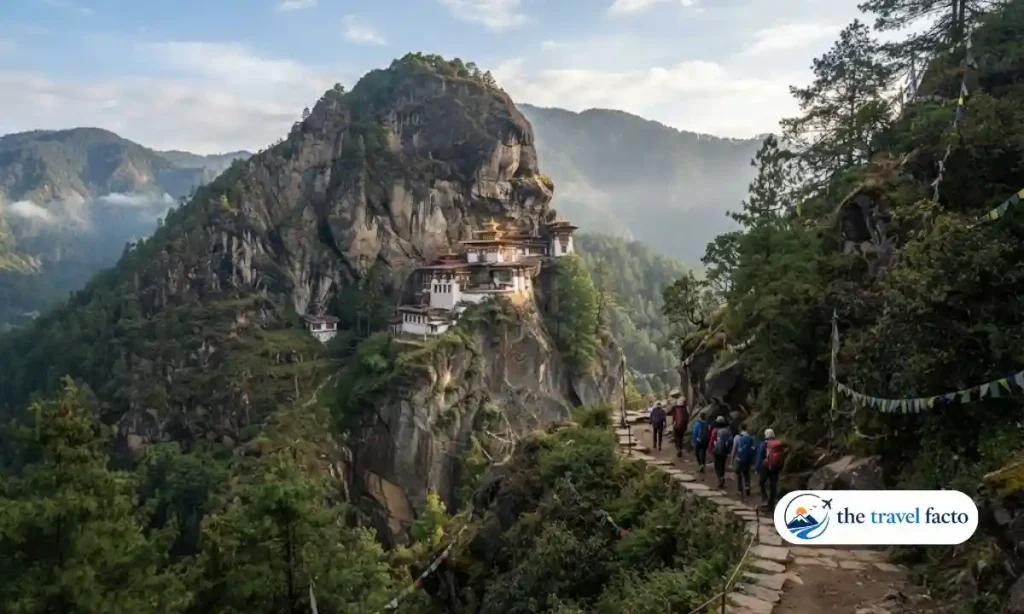
One of the most impressive experiences you can have in Bhutan is hiking up to Taktsang Monastery, known as Tiger’s Nest. The monastery is located on a rock above Paro Valley and is one of the main spiritual landmarks of the country. It is not an attraction you can see from a road, you will need to hike in a mountain environment before reaching the complex.
It may be physically challenging, especially if you are not used to uphill hiking. Regular breaks make the process more comfortable. Start early, take drinking water with you and put on proper hiking shoes. Once you reach the destination, the combination of rock monasteries, the forest, prayer flags and the valley view below will be well worth the effort.
| Detail | Information |
| Location | Paro Valley |
| Main experience | Mountain hike and monastery visit |
| Suitable for | Adventure lovers, spiritual travellers, photographers |
| Difficulty | Moderate to challenging depending on fitness |
| Time required | Several hours for the complete outing |
| Best approach | Start early and maintain a comfortable pace |
| Carry | Water, comfortable footwear and light layers |
Explore Thimphu and Its Cultural Attractions
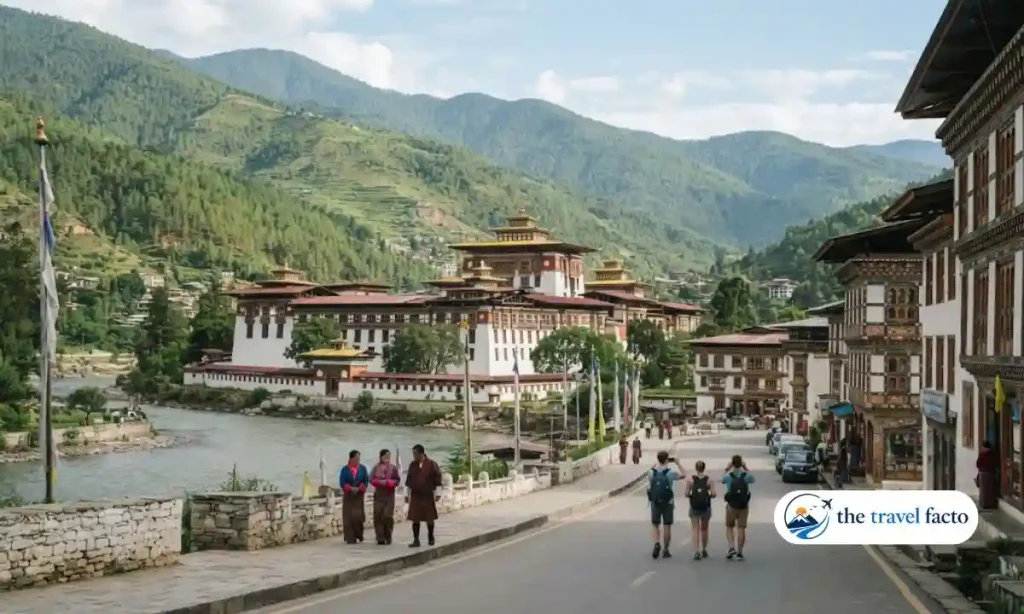
The capital of Bhutan offers cultural landmarks, religious sites, museums, markets and views, which can fill up a whole day or more. You will be able to visit the Memorial Chorten, Buddha Dordenma, Tashichho Dzong, National Library and local craft shops or markets.
What makes Thimphu interesting is the combination of a capital city and a very traditional culture. Do not limit yourself with just one landmark, but give yourself time to explore the city, its markets and see how everyday life takes place. Depending on your schedule, you may even try to explore traditional arts and crafts.
| Detail | Information |
| Location | Thimphu |
| Recommended time | 1–2 days |
| Popular attractions | Buddha Dordenma, Memorial Chorten, Tashichho Dzong |
| Other experiences | Markets, crafts, museums and local food |
| Best for | Families, couples, first-time visitors and culture lovers |
| Atmosphere | Cultural, peaceful and moderately urban |
Visit Punakha Dzong
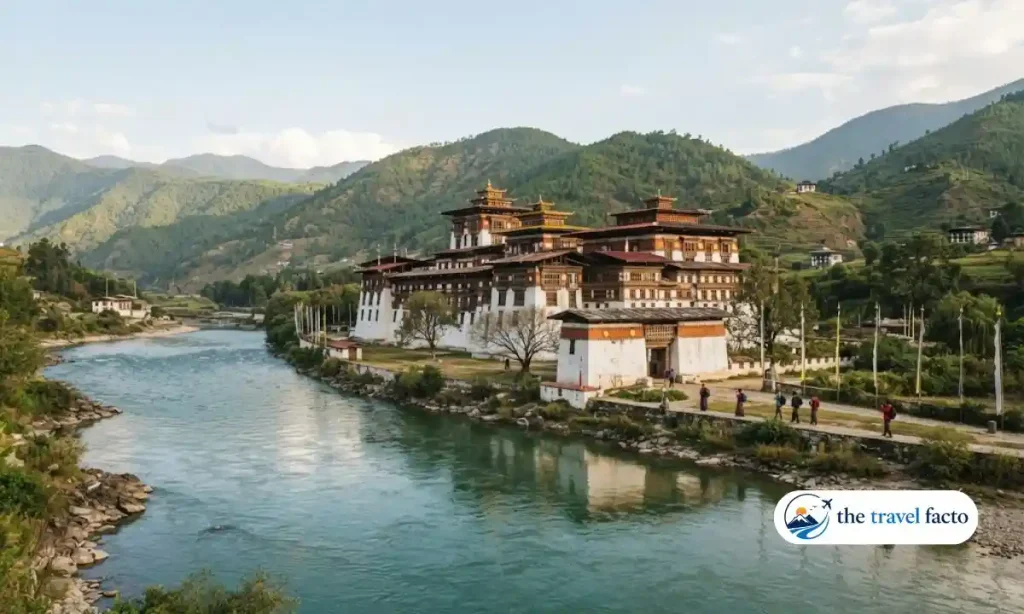
Punakha Dzong is probably the most picturesque piece of traditional architecture you will find in Bhutan. It is located at the junction of the Pho Chhu and Mo Chhu rivers, thus adding even more beauty to the already impressive building.
It is also situated in the comparatively warm valley, which makes it stand apart from the other destinations in Bhutan. Inside the dzong, you will be able to see large courtyards, religious rooms, carved woodwork and traditional Bhutanese decorations. Spend some time appreciating the building instead of passing quickly in order to take photos.
| Detail | Information |
| Location | Punakha |
| Setting | Confluence of Pho Chhu and Mo Chhu |
| Experience | Heritage, architecture and spirituality |
| Best for | History lovers, photographers and culture enthusiasts |
| Nearby experiences | Suspension bridge, Khamsum Chorten and Chimi Lhakhang |
| Suggested time | Around 1–2 hours for the main visit |
Enjoy Himalayan Views at Dochula Pass
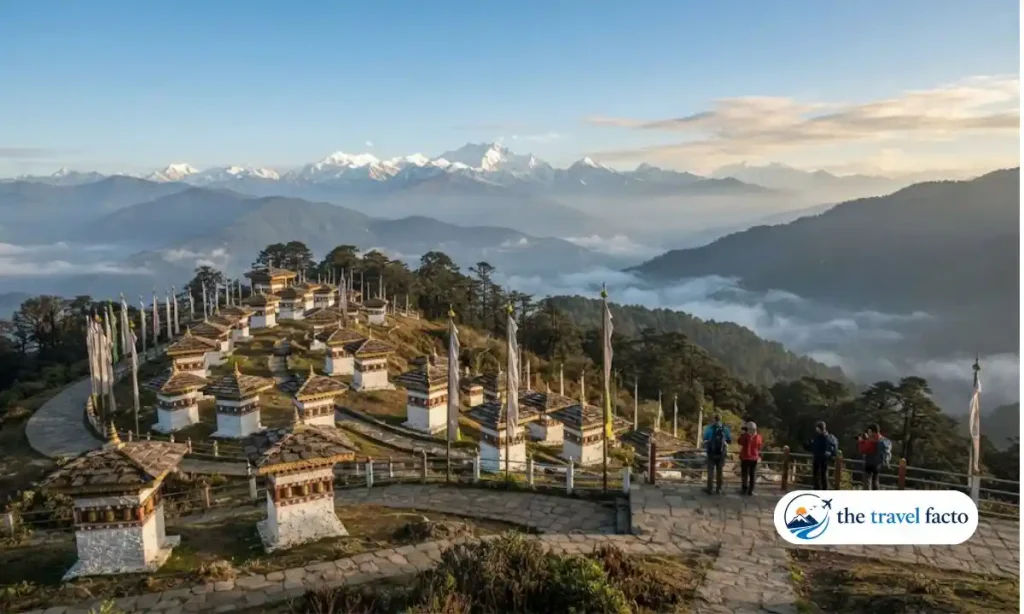
The Dochula Pass is one of the most picturesque sights on the road between Thimphu and Punakha. This pass is around 3,140 meters above sea level and is famous for its chortens, which number 108. On a clear day, you will be able to see impressive views of the Himalayas.
The weather is the important consideration here. If clouds or mist cover the mountains, the panorama will not be available for viewing, but still even when the mountains are covered, the forested landscape around and chortens make the pass a good place for a peaceful rest. If the sky is clear, you should give yourself some extra time to take photos here.
| Detail | Information |
| Location | Thimphu–Punakha route |
| Elevation | About 3,140 metres |
| Main attraction | 108 chortens and Himalayan views |
| Best for | Photography and scenic sightseeing |
| Nearby facility | Druk Wangyel Café area |
| Weather | Can change quickly at high altitude |
Walk Through the Beautiful Phobjikha Valley
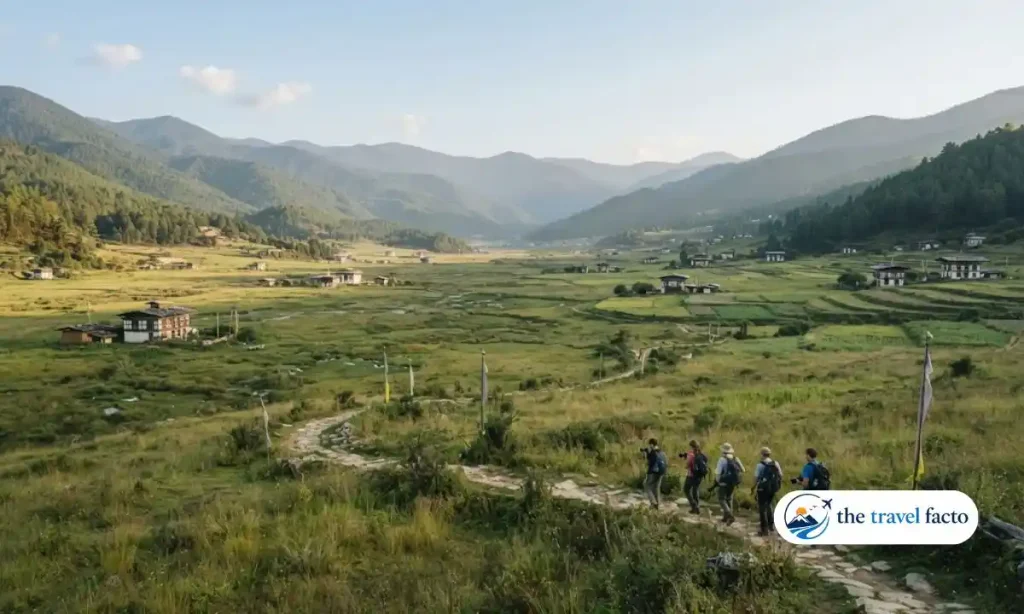
Phobjikha Valley is one of the best choices for those travellers who want to see the tranquil and natural side of Bhutan. The valley is surrounded by mountains and is famous for its calm and rural landscape. It is also a home for black-necked cranes and is popular among the birdwatchers.
Combining a valley visit with nature trail, visiting the Information Center for Black-Necked Cranes and Gangtey Monastery will help you spend the day productively. The valley landscape looks especially nice if seen slowly on foot. Instead of filling the day with several visits, you should spend some time just looking around.
| Detail | Information |
| Location | Phobjikha Valley |
| Nearby town | Gangtey |
| Famous for | Black-necked cranes |
| Popular activities | Nature walks, sightseeing and birdwatching |
| Best for | Nature lovers, photographers and families |
| Crane season | Generally winter |
See the Buddha Dordenma in Thimphu
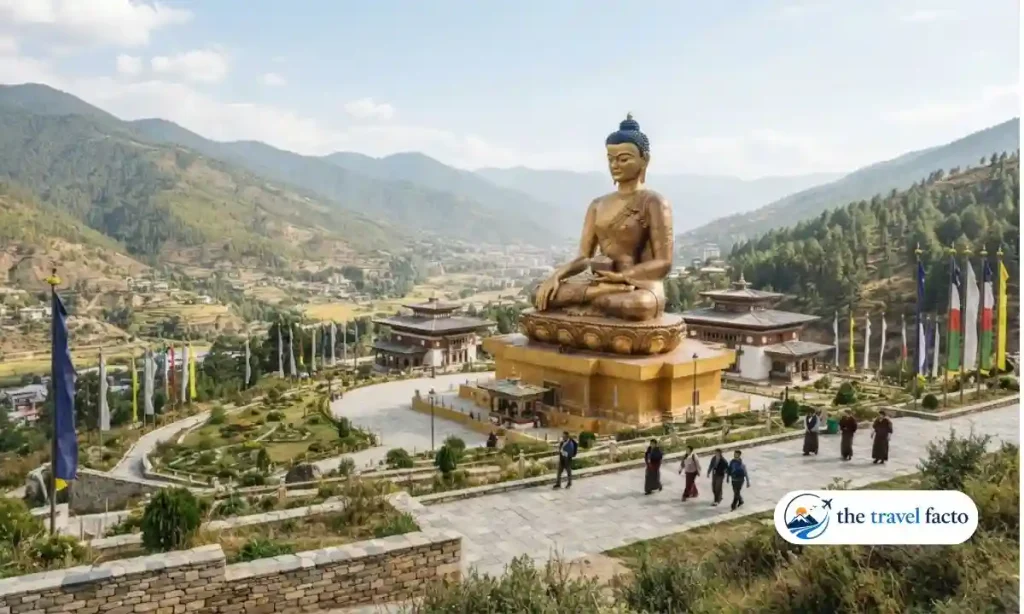
Buddha Dordenma is an extremely big statue of Buddha, overlooking Thimphu from the Kuenselphodrang. This spiritual landmark is also a popular sightseeing point thanks to its height and panoramic view of the capital.
The area around the statue is peaceful, which makes it a good place for resting. Visit during the daytime, so you could admire the statue and the surrounding hills. Photography lovers can benefit from the height of the landmark and take some photos of Thimphu against the mountain backdrop.
| Detail | Information |
| Location | Thimphu |
| Main attraction | Buddha Dordenma |
| Experience | Spiritual sightseeing and photography |
| Best time | Daytime |
| Best for | Families, photographers and culture lovers |
| Setting | Elevated mountain viewpoint above Thimphu |
Cross Punakha Suspension Bridge
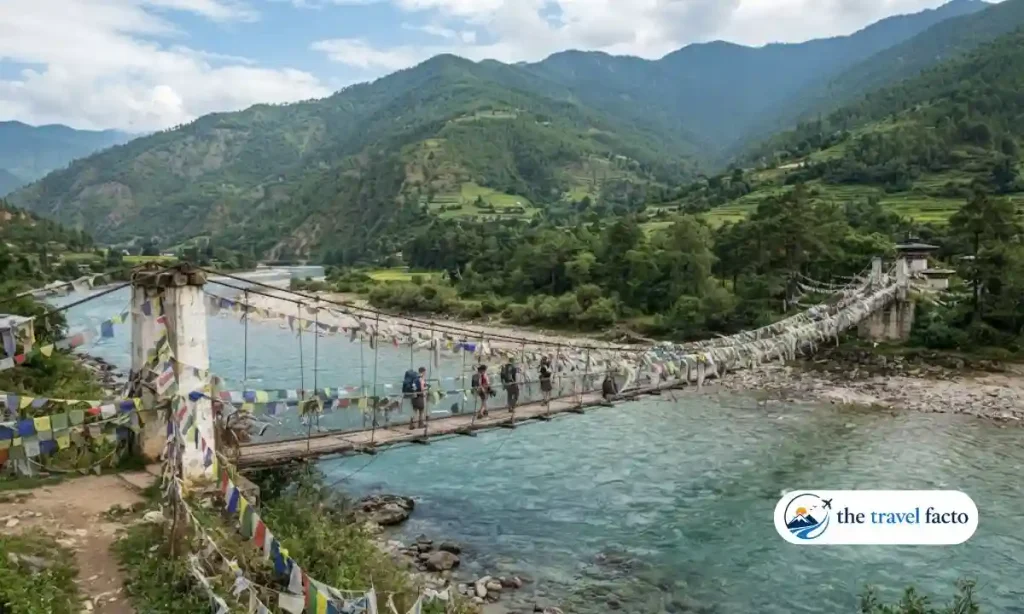
The Punakha Suspension Bridge is an adventurous experience, which consists of crossing the Po Chhu River. The bridge is decorated with prayer flags and is surrounded by mountains and the river itself.
It is a simple experience, which can be added to visiting Punakha Dzong. The suspension bridge is also a good point for taking photos, especially when prayer flags and river are combined in the same frame. People who are afraid of heights should take some extra time on the bridge and wait until the movement of the bridge stabilises.
| Detail | Information |
| Location | Punakha |
| Activity | Suspension bridge crossing |
| River | Po Chhu |
| Best for | Scenic views, photography and light adventure |
| Experience | Short but exciting |
| Tip | Walk carefully and follow local safety guidance |
Discover Bhutanese History at the National Museum
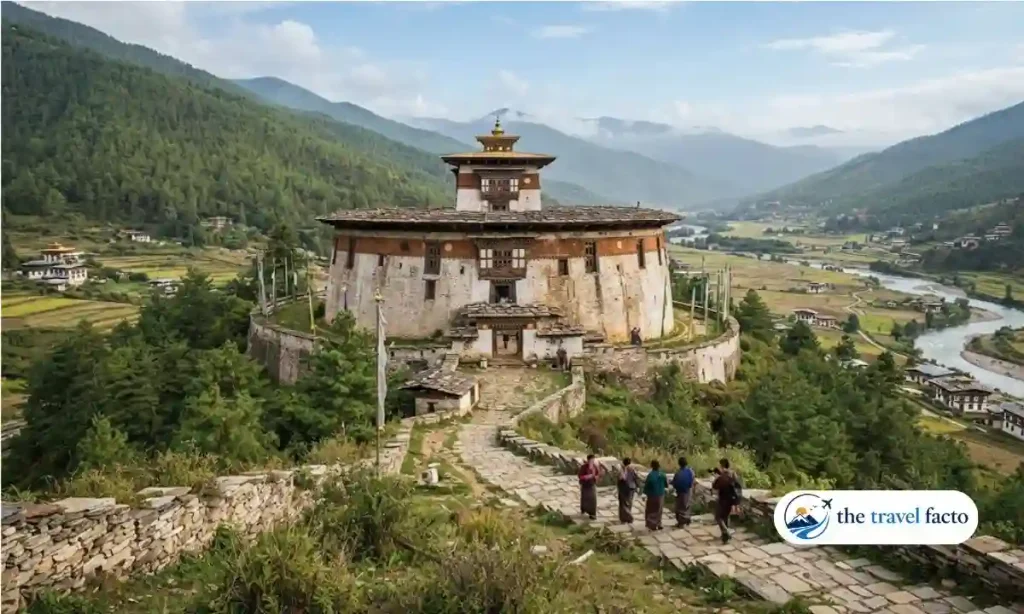
The National Museum of Bhutan, located in Ta Dzong in Paro, is the place to learn about the history, arts and culture of the country. Instead of seeing the temples and landscapes, museum allows you to learn about the cultural context of all this beauty.
The experience will be especially useful if you visit the museum during the first days of your trip. This will help you to understand symbols and traditions, which you will see at dzongs and monasteries. Spend enough time to explore all the exhibitions.
| Detail | Information |
| Location | Paro |
| Historic building | Ta Dzong |
| Main focus | Bhutanese history, art and culture |
| Notable interests | Religious artefacts, thangkas, traditional objects |
| Best for | History and culture enthusiasts |
| Suggested duration | Around 1–2 hours |
Taste Traditional Bhutanese Food
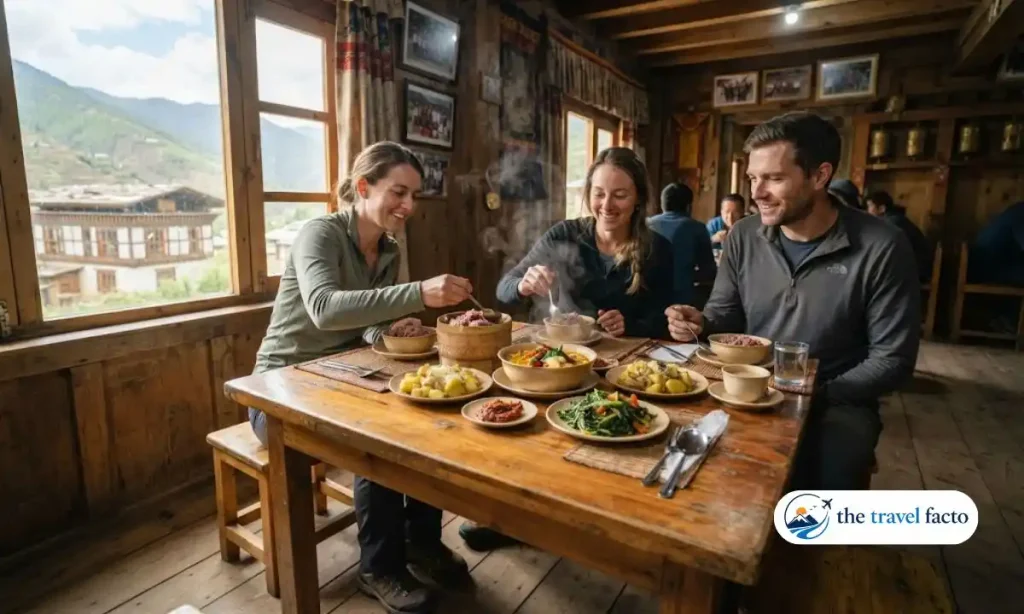
Exploring the local cuisine should definitely be among the things to do in Bhutan. The cuisine of the country has a distinct identity and Ema Datshi, which is the dish consisting of chillies and cheese, is one of the most popular Bhutanese dishes. Other common dishes consist of rice, vegetables, meat and dairy products.
If you are sensitive to spicy food, you should ask about the spiciness level before ordering. Visiting a traditional restaurant or homestay will give you a unique opportunity to experience the local cuisine because you will not be able to eat only international food there.
| Food Experience | What to Expect |
| Ema Datshi | Chilli and cheese-based traditional dish |
| Traditional rice meals | Common part of Bhutanese cuisine |
| Local vegetables | Regional seasonal preparations |
| Homestay meals | More personal local food experience |
| Best for | Food lovers and cultural travellers |
| Tip | Ask about spice level before ordering |
Experience a Colourful Tsechu Festival
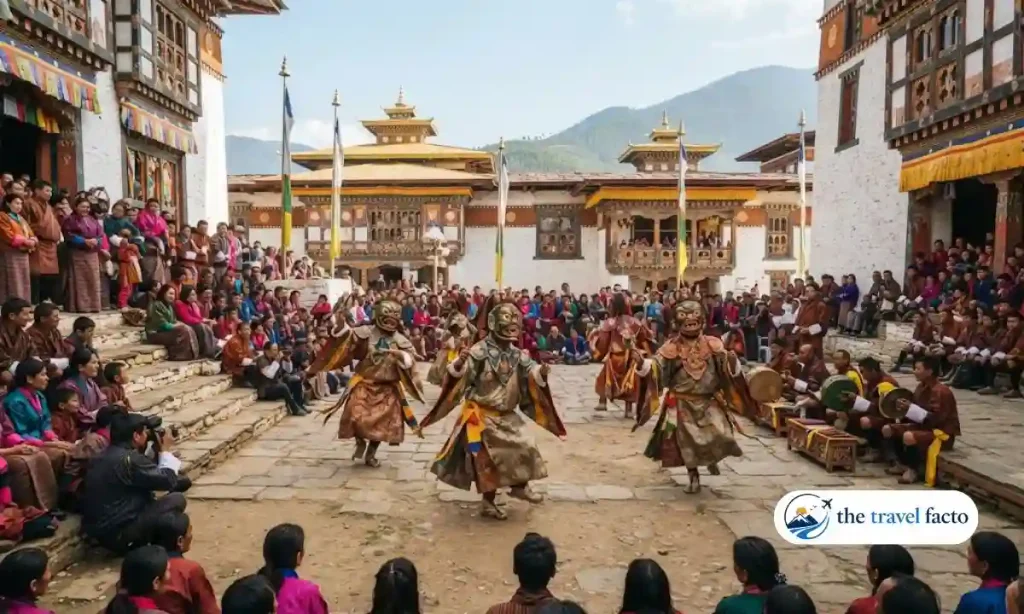
Tsechu is the most interesting way to experience Bhutanese religious and cultural traditions. Such festivals involve dancing in masks, musical performances, colourful dresses and religious ceremonies. Different towns and monasteries organise Tsechus, thus dates and programs vary.
Such festivals as Paro Tsechu and Punakha Tsechu are among the main events. Unfolding of Thongdrel, which is a special cloth during the final day of the festival is also an important element of many festivals.
If attending a Tsechu festival is something you would like to do, you should plan your trip accordingly. It is better to plan your visit around the festival dates instead of finding the nearest festival upon your arrival. Tsechu festivals may be crowded and you should behave in a respectable way because it is a religious event.
| Detail | Information |
| Experience | Religious and cultural festival |
| Main features | Masked dances, rituals and traditional dress |
| Popular examples | Paro Tsechu, Punakha Tsechu, Gangtey Tsechu |
| Best for | Culture lovers and photographers |
| Crowd level | Can be busy during major festival days |
| Important | Respect religious customs and local instructions |
Go River Rafting in Punakha
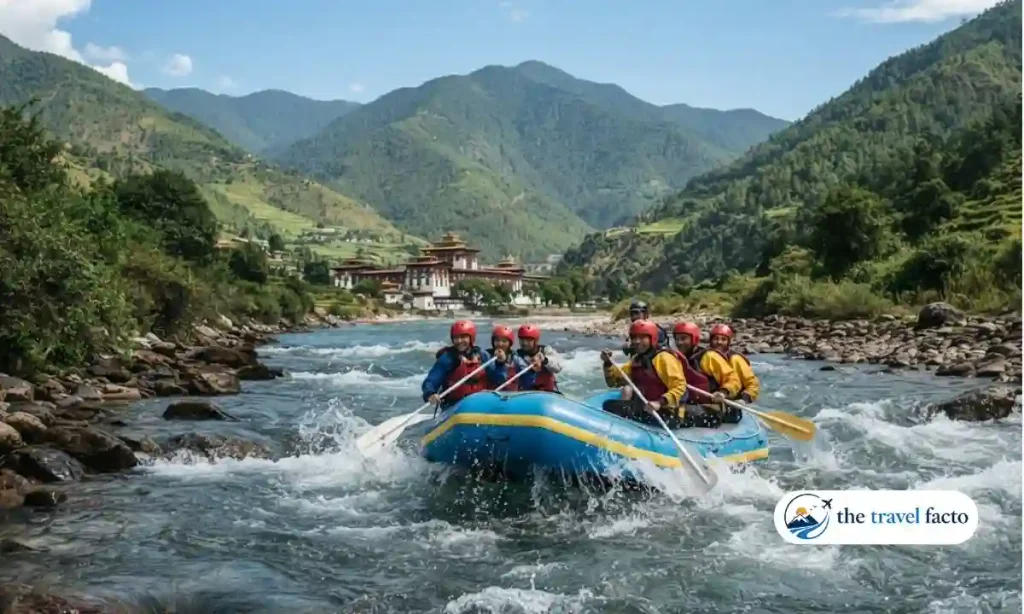
While monasteries and mountain landscapes are definitely not the only things in Bhutan, you can add white-water rafting to your list of activities, especially if you decide to visit Punakha. The Pho Chhu and Mo Chhu rivers are associated with rafting and offer impressive Himalayan landscape.
Conditions of rafting depend on the level of the rivers, weather and seasons, thus you should arrange the activity with the appropriate provider. This is a good choice for you if you would like to combine cultural sightseeing with more energetic experience.
| Detail | Information |
| Main area | Punakha |
| Rivers | Pho Chhu and Mo Chhu |
| Activity | White-water rafting |
| Best for | Adventure travellers |
| Equipment | Provided by activity operator |
| Safety | Follow guide and river-condition advice |
Explore Bhutan’s Dzongs, Monasteries and Lhakhangs
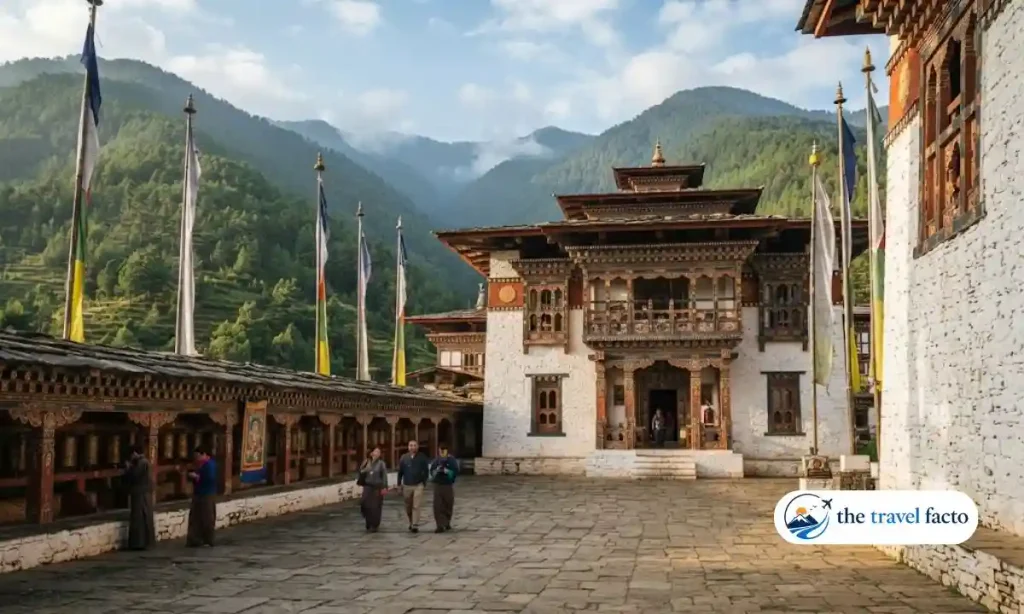
Religious architecture is the central element of Bhutanese trips. Dzongs, monasteries, temples and lhakhangs are scattered all around the country and most of them are active worshipping places. Tashichho Dzong, Rinpung Dzong, Tango Monastery, Kyichu Lhakhang and other religious places represent the traditions of the country differently.
When visiting a religious place, keep in mind that you enter the active religious site. The guidance of the Bhutanese official tourism services recommends maintaining silence, dressing properly, removing shoes where necessary and avoiding taking photos when it is forbidden.
| Type of Site | Examples | Main Experience |
| Dzong | Punakha Dzong | Architecture and heritage |
| Dzong | Tashichho Dzong | Religion and administration |
| Monastery | Tango Monastery | Spiritual and mountain setting |
| Lhakhang | Kyichu Lhakhang | Buddhist heritage |
| Religious site | Changangkha Lhakhang | Local spiritual experience |
Visit Chimi Lhakhang

Chimi Lhakhang, located in Punakha region, is popular as the fertility temple, and is associated with the Bhutanese Buddhist figure Drukpa Kunley. The temple can be reached through a pleasant hike through the rural landscape, so it gives visitors the opportunity to experience more than just the temple itself.
The surrounding agriculture and the rural landscape will make the visit quite different from the big dzong complexes. It is worth spending some time to look around and appreciate the traditional buildings and landscape during the hike.
| Detail | Information |
| Location | Punakha District |
| Type | Buddhist temple |
| Known for | Association with Drukpa Kunley and fertility traditions |
| Access | Short rural walk |
| Best for | Culture and spiritual experiences |
| Surroundings | Villages and agricultural landscape |
Go Wildlife Watching in Bhutan

Due to its diverse Himalayan landscape, Bhutan is a good destination for nature lovers. Depending on the region and the season, travellers can expect to see different birds and wildlife, but the sightings cannot be guaranteed. The Phobjikha Valley is especially important for black-necked crane watching during winter.
For a more varied experience, the protected landscapes such as Jigme Dorji National Park can be visited to appreciate the forests and the mountain landscape of Bhutan. It is recommended to observe the wildlife in the undisturbed way. As it is stated in the guidance of Bhutan’s tourism services, visitors should not venture into the wilderness without proper accreditation.
| Wildlife Experience | Recommended Area |
| Black-necked cranes | Phobjikha Valley |
| Himalayan birds | Forest and protected areas |
| Mountain wildlife | National parks and guided nature areas |
| Nature photography | Forests and valleys |
| Best for | Birdwatchers and nature lovers |
| Important | Do not disturb or feed wildlife |
Enjoy Traditional Archery and Khuru

Archery is an important part of Bhutanese culture and is also a national sport of the country. You will enjoy watching traditional archery session much more than just reading about it because you will see the atmosphere, the traditional equipment and enthusiasm about the sport.
Khuru is a traditional dart game, which you may also be able to observe depending on the tour or the local experience. According to Bhutan’s tourism services, archery and Khuru are the experiences offered to the visitors.
| Activity | Experience |
| Archery | Traditional Bhutanese sport |
| Khuru | Traditional dart game |
| Best for | Culture lovers and families |
| Can involve | Demonstration or participation |
| Best approach | Join through a local organised experience |
Explore Bhutanese Textiles and Handicrafts
Bhutanese textiles are an important part of the country’s traditions. The visitor can explore the centres for weaving, craft shops and traditional art galleries to see the patterns, colors and fabric working.
The experience becomes more valuable if you move beyond the shopping and understand the techniques behind the product. Local handwoven textiles, handicrafts and artwork are good souvenirs that will distinguish your collection.
| Craft Experience | What You May Find |
| Weaving | Traditional Bhutanese textiles |
| Handicrafts | Locally made decorative products |
| Art | Paintings and traditional artwork |
| Shopping | Handmade cultural souvenirs |
| Best for | Art lovers and culture enthusiasts |
Stay in a Traditional Farmhouse or Homestay
A traditional farmstay can give you a different experience in comparison to the stay in a conventional hotel. Instead of getting a room in a tourist property, you will be able to look closer at the local architecture, food and life. The farmhouses and homestays are specifically mentioned as one of the visitor experiences among Bhutan’s tourism programs.
This kind of stay is especially suitable if you want to slow down during your visit to Bhutan. You will be able to have a meal cooked traditionally, talk to your hosts and experience the pace of life in rural Bhutan.
| Detail | Information |
| Experience | Local accommodation and cultural immersion |
| Setting | Rural villages and valleys |
| Possible activities | Local meals, walks and cultural interaction |
| Best for | Couples, families and slow travellers |
| Main benefit | Closer connection with local life |
Relax with a Traditional Hot-Stone Bath
After the hiking and long driving through mountains, a traditional hot stone bath can be a good option to relax. Hot stone bathing is specifically recommended as a unique wellness experience among the Bhutan tourism promotions.
The experience usually includes heating of the stones and preparation of a bath in a traditional way. The availability depends on the accommodations and local providers, but you can arrange your hot stone bath in advance if you want to include it in your trip.
| Detail | Information |
| Experience | Traditional Bhutanese wellness |
| Best after | Hiking or sightseeing |
| Setting | Selected hotels, farmhouses and wellness properties |
| Best for | Couples and relaxation-focused travellers |
| Availability | Depends on accommodation/provider |
Explore Local Markets and Shop for Souvenirs
Visiting local markets is one of the easiest ways to see the everyday life of Bhutan. There are several places in Thimphu, where travellers can see local products, crafts, textiles and food. There are also smaller markets in other towns, and the atmosphere is usually more relaxed there.
Try to look for locally-made handicrafts, textiles, artwork and other products. The markets and craft bazaars are specifically highlighted as the visitor experiences by Bhutan’s tourism services.
| Shopping Option | What to Explore |
| Craft markets | Handmade products |
| Textile shops | Traditional fabrics |
| Local markets | Food and everyday products |
| Art shops | Paintings and cultural artwork |
| Best for | Souvenir hunters and culture lovers |
Take Scenic Mountain Drives
The journey through Bhutan by road can become one of the highlights of the trip. The mountainous terrain of the country means that you will pass through forests, valleys, villages and mountain passes. According to Bhutan’s official tourism guidance, topography of the country allows experiencing beautiful drives and hiring a car with a driver is a convenient way to travel in Bhutan.
Do not think about mountain travels as a way to travel certain distance in the shortest possible way. Plan the trips with some flexibility in mind in order to stop at the viewpoints and not to turn the beautiful trip into a hurried travel.
| Road-Trip Feature | Why It Matters |
| Mountain passes | Panoramic Himalayan scenery |
| Forest roads | Natural landscapes |
| River valleys | Scenic photography |
| Villages | Local-life experiences |
| Best for | Couples, families and photographers |
| Travel tip | Keep extra time for mountain journeys |
Discover the Trans Bhutan Trail
For the travelers who are interested in hiking, Trans Bhutan Trail offers an opportunity to explore the country on foot through a historic path. It is especially attractive for people, who are looking not just for short sightseeing walks but a combined experience of villages, landscape, forests and culture.
Trans Bhutan Trail is mentioned by Bhutan Tourism among the available experiences. This option should be chosen as the trekking experience rather than as something you may squeeze in your two-day vacation. You should consider your fitness, footwear, weather, accommodation and guide arrangements before setting off.
| Detail | Information |
| Experience | Long-distance trekking |
| Main appeal | Nature, villages and cultural immersion |
| Suitable for | Experienced walkers and adventure travellers |
| Planning | Requires more preparation than a normal sightseeing day |
| Best approach | Use an organised and appropriately guided itinerary |
Experience Bhutanese Village Life
If you are interested in knowing more about Bhutan beyond its famous landmarks, then you should spend some time in its villages. Rural Bhutan combines traditional buildings, farms, forests, mountain trails and close-knit communities. The contrast between the cultural centers of the country and the countryside is one of the reasons a slow trip is so valuable.
The visit can be as simple as walking through the village, talking to your hosts, having a meal traditionally prepared and observing the activities of the locals. Always ask permission before photographing local residents and be respectful to private houses and religious sites.
| Village Experience | What You Can Do |
| Village walk | Explore local surroundings |
| Farm visit | Understand rural life |
| Homestay | Experience local hospitality |
| Local meal | Taste traditional food |
| Photography | Capture architecture and landscapes respectfully |
Visit Gangtey Monastery
Gangtey Monastery, also called Gangtey Goenpa, is an important religious landmark overlooking the Phobjikha Valley. The positioning makes it attractive because visitors can combine the visit to the religious building and the valley and the nature. It also plays an important role in the spiritual life of the area.
If you come during the period of the festival, the atmosphere will be much more vibrant due to religious dancing and gathering of the community. Outside the festival period, the monastery and surrounding landscape will make a more quiet experience.
| Detail | Information |
| Location | Gangtey, Phobjikha Valley |
| Experience | Monastery, culture and scenery |
| Best combined with | Phobjikha Valley and nature trails |
| Best for | Spiritual and cultural travellers |
| Nearby attraction | Black-Necked Crane Information Centre |
Try a Bhutanese Cooking Experience
The food becomes more memorable when you know how it was prepared. A cooking class will introduce you to the local ingredients, chilli-based recipes and traditional methods of preparing. Bhutan’s tourism programs include cooking class among the available additional experiences.
It is especially a good choice for travelers who prefer the interactive experience. You will learn about the ingredients and technique used in the preparation of the meals as opposed to just ordering one in a restaurant.
| Detail | Information |
| Activity | Bhutanese cooking class |
| Experience | Prepare traditional dishes |
| Best for | Food lovers and families |
| Setting | Local experience, farmhouse or selected accommodation |
| Main benefit | Interactive cultural experience |
Enjoy Bhutan as a Slow-Travel Destination
The best way to explore Bhutan is to make sure that you allocate time in your schedule without any plans. You can sit along a river, walk through a village, stay in the courtyards of monasteries, eat traditional meals, or simply gaze at the mountains from your hotel. The tourism literature of Bhutan shows the country in contrast to towns and countryside, mountain and valleys, adventure and wellness.
The slow travel approach will also help prevent exhaustion during the vacation in Bhutan since the country has challenging roads and physically difficult things to do.
| Slow-Travel Experience | Ideal Setting |
| Mountain views | Paro, Punakha and Himalayan valleys |
| Quiet walks | Villages and forest trails |
| Riverside relaxation | Punakha and other river valleys |
| Traditional meals | Farmhouses and local restaurants |
| Wellness | Hot-stone bath and peaceful stays |
| Best for | Couples, families and solo travellers |
Things to Do in Bhutan for Couples
Bhutan is an excellent place to go for couples who like scenic and meaningful things as opposed to a night life oriented vacation. A combination of a Tiger’s Nest walk, scenic mountain drives, staying in quiet valleys, eating local food, and taking a traditional hot stone bath is great for creating a balanced itinerary.
Couples can also visit a farmhouse, explore the valley of Phobjikha, have a peaceful moment gazing at the mountains, or go on a slow walk in Paro. The benefit of these experiences is that they do not necessarily need expensive entertainment. They involve the scenery and culture of Bhutan.
| Couple Experience | Why It Is Special |
| Tiger’s Nest hike | Shared adventure |
| Scenic drive | Mountain views |
| Phobjikha Valley | Peaceful surroundings |
| Farmhouse stay | Local cultural experience |
| Hot-stone bath | Relaxation |
| Local dinner | Authentic food experience |
Things to Do in Bhutan with Family
Families can build their Bhutan itinerary in a combination of sightseeing, culture, food, and nature. Thimphu is good for teaching children about the culture of Bhutan, while Punakha can provide impressive architecture and outdoor activities. Museums, markets, and wildlife related things to do can diversify the itinerary.
If the family has small kids, it is better to avoid putting too many physically demanding hikes in the schedule on consecutive days since Bhutan’s landscape is quite exhausting. A combination of a physically difficult day and sightseeing day is likely to result in a more comfortable holiday.
| Family Activity | Suitability |
| Buddha Dordenma | Easy sightseeing |
| National Museum | Educational |
| Punakha Dzong | Culture and architecture |
| Local markets | Everyday-life experience |
| Phobjikha Valley | Nature |
| Easy village walks | Outdoor experience |
Things to Do in Bhutan for Adventure Lovers
Adventure travelers can find much more things to do than they might expect. Tiger’s Nest offers the classic hike, while rafting, mountain trekking, cycling, and long trails are great additions to make a trip more adventurous. The official website of tourism in Bhutan also mentions mountain biking, trekking, and other outdoor activities.
In case adventure is your main aim during the holiday, it is advisable to plan your itinerary around this particular thing instead of adding different activities in between sightseeing stops. The weather, the altitude, and roads’ condition can influence your outdoor activities planning.
| Adventure | Best Experience |
| Tiger’s Nest hike | Paro |
| White-water rafting | Punakha |
| Long-distance trekking | Trans Bhutan Trail |
| Mountain biking | Selected mountain routes |
| Nature trekking | Phobjikha and protected areas |
| Scenic road trips | Mountain passes and valleys |
Best Time to Experience the Things to Do in Bhutan
The best time of the year depends on the activities you plan to engage in. Spring and autumn can be suitable for sightseeing, hiking, and mountain photography since the weather in the regions can be favorable. The autumn can be particularly appealing for travelers wishing to see the clear view of the mountains, while winter is great for visitors who wish to see the black-necked cranes in Phobjikha.
The festival travel requires some special planning since the dates of festivals in Bhutan vary from region to region and year to year. If the festival is on your list of things to do, you should consult the official calendar of Bhutan and make sure that it is included into your itinerary. The providers of tourist services in Bhutan offer itineraries for festivals like Paro, Punakha, and Gangtey Tshechu.
| Season | What to Expect | Best Experiences |
| Spring | Pleasant conditions and fresh greenery | Hiking, sightseeing, photography |
| Summer | Rain can occur; landscapes become lush | Nature and quieter travel |
| Autumn | Often good visibility and comfortable travel | Mountains, trekking and festivals |
| Winter | Colder conditions, especially at altitude | Crane watching, cultural sightseeing |
How Many Days Are Enough to Explore Bhutan?
Seven days are enough for exploring the western highlights of Bhutan, especially if the itinerary includes Paro, Thimphu, and Punakha. This is sufficient time to see the main attractions, have a walk to the Tiger’s Nest, and enjoy the scenic mountain drives.
Eight or ten days, or even more, provide for a much more relaxed itinerary. In addition to the three mentioned above places, you can include the valley of Phobjikha, spend more time in countryside, have more cultural experience, and participate in adventure activities. Those who wish to explore Bumthang or go on a longer trekking should allow themselves more days.
| Trip Length | Suggested Focus |
| 4–5 days | Paro, Thimphu and selected highlights |
| 6–7 days | Paro, Thimphu, Punakha + Tiger’s Nest |
| 8–10 days | Add Phobjikha and more cultural experiences |
| 10+ days | Add Bumthang, longer trekking or rural stays |
Bhutan Travel Tips You Should Know
It is important to arrange your transportation and all documents before coming to Bhutan. The official information about Bhutanese tourism states that visa is needed for the majority of international travelers, while Indian nationals can use the proper permits and identification papers to visit the country. Before traveling, it is recommended to check the official website of the tourism of Bhutan since requirements and procedures can change.
It is also important to understand that traveling in Bhutan is different from traveling across a plain country since the country has a mountainous landscape. Official guidance recommends not to rent cars without drivers since it is not available in Bhutan.
| Travel Point | What You Should Know |
| Entry documents | Check the latest official visa/permit requirements |
| Transport | Mountain travel can take time |
| Self-drive | Not available according to official tourism guidance |
| Clothing | Carry layers for changing temperatures |
| Sacred sites | Dress modestly and follow local etiquette |
| Photography | Ask before photographing people |
| Hiking | Use suitable footwear and carry water |
| Wildlife | Do not disturb animals or enter wilderness areas casually |
| Payments | Cards are usable in many urban locations, but availability can vary |
| Currency | Bhutanese Ngultrum is the local currency |
Bhutanese Religious Etiquette for Visitors
Since many of the attractions in Bhutan are religious places, travelers should know a few basic rules of etiquette. The guidelines about tourism in Bhutan ask the visitors to remain silent at the sacred places, not to obstruct the worshippers, and to dress appropriately. The photography is prohibited inside temples and other sacred areas.
You might need to remove your shoes before entering some religious places. You should also not touch religious items and sit in sacred places. You should ask permission to photograph locals who are praying or participating in religious ceremony.
| Do | Avoid |
| Dress modestly | Wearing inappropriate clothing at temples |
| Follow instructions | Entering restricted areas |
| Maintain silence | Talking loudly in sacred spaces |
| Ask before photographing people | Taking intrusive photographs |
| Remove shoes when required | Ignoring temple customs |
| Respect religious objects | Touching sacred items |
Where to Stay in Bhutan
Accommodation mostly depends on your itinerary. Places like Paro and Thimphu provide convenient options for the tourists who want to visit main attractions, have a dinner in a restaurant and do shopping. Punakha is great for combining visits to dzongs with the rivers and valleys, while Phobjikha is suitable for travelers interested in nature and countryside atmosphere.
Homestays and farmhouses can be a good choice if cultural immersion is your priority. The official portal of Bhutan Tourism Services will help you find accommodations, homestays, tour operators, guides, and various food services related to tourism.
| Destination | Best for | Stay Style |
| Paro | Tiger’s Nest and heritage | Hotels, resorts, homestays |
| Thimphu | City sightseeing and shopping | Hotels and guesthouses |
| Punakha | Dzong, rafting and valleys | Hotels, resorts and homestays |
| Phobjikha | Nature and cranes | Valley stays and farmhouses |
| Bumthang | Culture and longer trips | Hotels, guesthouses and homestays |
A Simple 7-Day Bhutan Itinerary
If it is your first time in Bhutan and you want to experience a mixture of culture, nature, and adventure, the 7-day plan can be designed around the western circuit.
| Day | Suggested Plan |
| Day 1 | Arrive in Paro and travel to Thimphu |
| Day 2 | Explore Thimphu, Buddha Dordenma and cultural attractions |
| Day 3 | Travel towards Punakha via Dochula Pass |
| Day 4 | Explore Punakha Dzong, Chimi Lhakhang and suspension bridge |
| Day 5 | Visit Phobjikha Valley and Gangtey area |
| Day 6 | Return towards Paro and explore Paro attractions |
| Day 7 | Hike to Tiger’s Nest and depart according to flight schedule |
FAQs
What is the best thing to do in Bhutan for first-time visitors?
The Tiger’s Nest hike is the classic experience, but combining it with Thimphu, Punakha Dzong and Dochula Pass gives a much broader introduction to Bhutan.
Is Tiger’s Nest worth the hike?
Yes. The trail is physically demanding for some travellers, but the cliffside monastery, forest route and mountain scenery make it one of Bhutan’s signature experiences.
What is Bhutan famous for besides Tiger’s Nest?
Bhutan is also known for its dzongs and monasteries, Himalayan landscapes, traditional culture, Tsechu festivals, archery, distinctive cuisine and protected natural areas.
Is rafting available in Bhutan?
Yes. Rafting experiences are available in the Punakha region, particularly on the Pho Chhu and Mo Chhu rivers, subject to conditions and organised activity availability.
What food should I try in Bhutan?
Ema Datshi is one of the best-known Bhutanese dishes. You can also explore other traditional rice, vegetable and meat-based meals depending on the region and restaurant.
Final Thoughts
The biggest advantage of planning a trip to Bhutan around the things you can do there and not the sights is that you get to know different aspects of the country. Tiger’s Nest is a challenging spiritual journey, Punakha is rivers and historic architecture, Thimphu is urban and cultural Bhutan, while Phobjikha is peaceful nature getaway.
There is also much to do besides the famous sightseeing circuit in Bhutan. You can attend Tsechu, watch the traditional archery, taste local dishes, explore handicrafts of Bhutan, stay with a local family, go rafting, watch birds, hike the Himalayas or just slow down in a mountain valley. The official tourism resources of Bhutan underline the importance of the adventure, wellbeing, culture, and nature that combine into something that is unique about the country.
The best thing you can do in order to have a memorable experience in Bhutan is to design your itinerary around the places and activities that are interesting to you and leave some time between them. Bhutan is a destination that should be experienced slowly.
Also, Read About: Things to Do in Jibhi: 20 Best Places, Activities, Cafes, Stays & Complete Travel Guide