
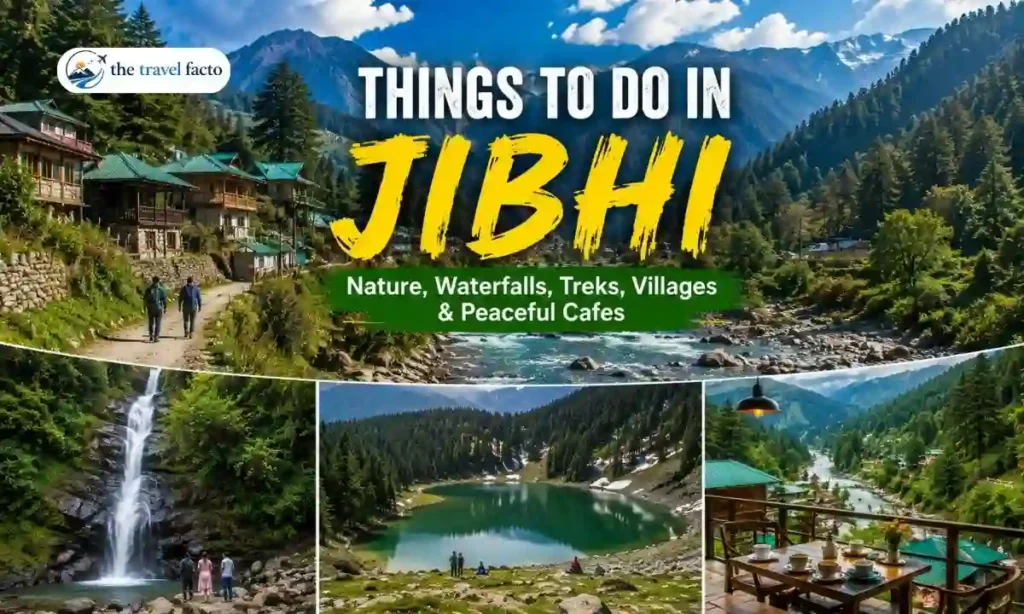
Jibhi, located in the Tirthan Valley area of Himachal Pradesh is a quiet mountain village and well-known as a place filled with forest trails, waterfalls, ancient wooden architecture and slow village life along clear flowing streams of hungry water. It is a perfect hideout for travelers looking for something less crowdy than the busy hill stations. Your days can go wandering to Jibhi Waterfall, Chehni Kothi, ancient temples beyond the river, trekking towards Serolsar Lake and Raghupur Fort, driving away into Jalori Pass, Tirthan River Ricebowls and the trout fishing lake or sitting at a riverside café watching a sheep eat grass with an actual mountain view. Jibhi is ideal for a base to visit near by Shoja, Bahu and several other villages. Your Maasai tribe travel information is 2250meters – Jibhi in a Tirthan Valley your current data set ends at October 2023 and Jalori Pass to about ten meters of 3120meters.
This Jibhi travel guide caters to those looking for things to do in Jibhi beyond a regular sightseeing list. As well as attractions, practical info on estimated travel time, difficulty rating of the hike/activities, amenities for food and cafes nearby, where to stay near XYZ all catered to families or couples, seasonal conditions including permits you may need –a bunch of travel tips basically.
Jibhi Travel Overview
The best way to enjoy Jibhi is as not a destination you hurry through attractions but as a slow -travel place. The central village consists of homestays, cottages, cafés and small shops, while the surrounding land is rich in forests,rivers,villagesand trekking routes. Jibhi is linked with the Tirthan Valley as well as the road leading to Jalori Pass & Shoja.
| Travel Detail | Information |
| Destination | Jibhi |
| State | Himachal Pradesh |
| District | Kullu |
| Region | Tirthan Valley |
| Approx. altitude | Around 2,250 meters |
| Main attractions | Jibhi Waterfall, Chehni Kothi, Jalori Pass, Serolsar Lake |
| Famous for | Waterfalls, forests, cafés, homestays, trekking, and village life |
| Best for | Couples, families, solo travelers, nature lovers, and trekkers |
| Ideal duration | 2–3 days |
| Nearest major airport | Bhuntar/Kullu Airport |
| Nearest major railway option | Joginder Nagar, with road travel onward |
| Main local base | Jibhi village and Main Market |
| Nearby major town | Banjar |
| Main road connection | NH-305 |
1. Visit Jibhi Waterfall

The easiest and most frequented of all experiences to combine in your itinerary is at the Jibhi Waterfall. You reach the waterfall with a short walk from the village area through green forested paths, which include stone paths and small bridges on your way. The waterfall runs through the year, but its character varies according to season and it is usually more vigorous after heavy rain. This is the magical spot that a trail leads to, and with good reason — while this is not an easy trek, it also isn’t too much of a challenge for families or couples looking for 1-hour rainforest escapes. As this area can be crowded during weekends and holidays, an early visit allows for a calmer encounter.
| Jibhi Waterfall Details | Information |
| Type | Natural waterfall |
| Approx. walk | 15–20 minutes from village area |
| Difficulty | Easy |
| Main activity | Nature walk, photography, and sightseeing |
| Best for | Families, couples, and nature lovers |
| Water flow | Stronger during rainy periods |
| Swimming | Avoid unless local conditions are confirmed safe |
| Facilities | Basic pathway and nearby local businesses |
| Café/food | Cafés and eateries available back in Jibhi |
| Stay nearby | Multiple homestays and cottages in Jibhi |
| Suggested time | 1–2 hours |
If you want to stay close to the waterfall area, check out some accommodations listed around Seri Road like Majestic View Cottage Jibhi, or search for other homestays and cafés in the main area of Jibhi as well.
2. Explore Mini Thailand

Mini Thailand is a smaller riverside location famous for its strangely fashioned rocks and crystal-clear water. It has gained popularity from the rock formations and water which provide a unique environment, like a small tropical pool. Well, stay realistic expectations–the tourist attraction is small and water level, weather and crowd conditions determine the experience here pretty much. This is better approached as a short stop over, rather than intended new day of visits.
| Mini Thailand Details | Information |
| Type | Natural riverside attraction |
| Main attraction | Rock formations and clear water |
| Best for | Photography and short visits |
| Difficulty | Easy to moderate depending on access |
| Suggested time | 45–90 minutes |
| Family suitability | Yes, with supervision |
| Swimming | Do not assume it is safe |
| Food | Carry essentials or return to Jibhi |
| Café options | Better availability in Jibhi village |
| Facilities | Limited at the natural site |
3. Visit Shringa Rishi Temple
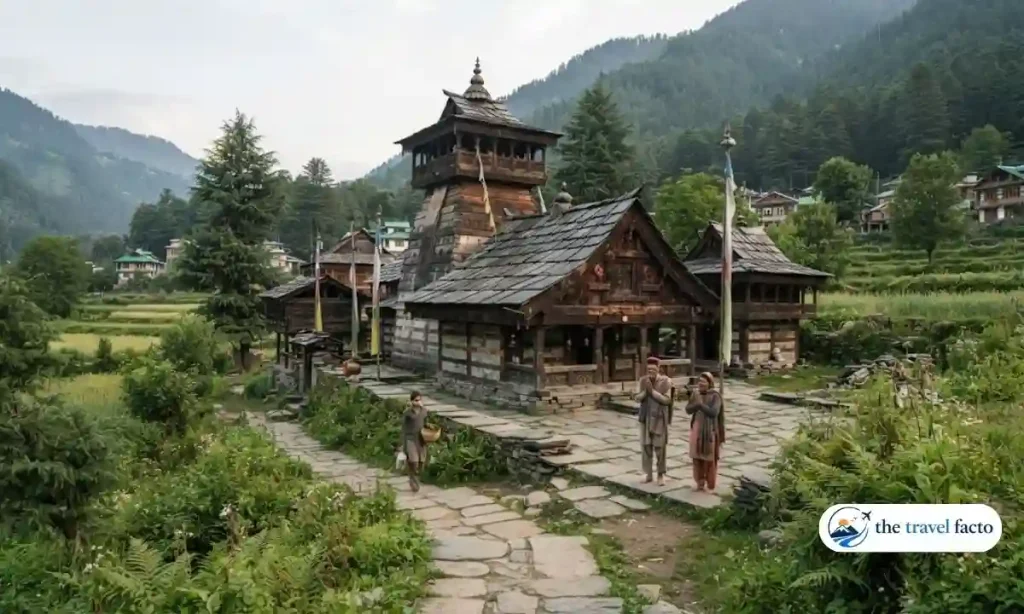
One of the important temples around Jibhi is that of Shringa Rishi. This temple has traditional wooden Himalayan architecture associated with Ripudaman góshs Shringa Rishi. The peaceful location provides the ideal getaway for travelers who want to immerse themselves in La Vallèe culture, and not just visit waterfalls & viewpoints. You are based on travel information as of October 2023, which is pegged to be approximately a couple of kilometers away from Jibhi (but vary based on if walkable or driving).
| Shringa Rishi Temple Details | Information |
| Type | Hindu temple |
| Architecture | Traditional wooden/pagoda-style |
| Main experience | Darshan, architecture, and local culture |
| Approx. distance | Around 2 km from Jibhi |
| Difficulty | Easy |
| Best for | Families, couples, and cultural travelers |
| Suggested time | 45–90 minutes |
| Photography | Follow temple rules |
| Food | Return to Jibhi for more options |
| Nearby stay | Jibhi homestays and cottages |
4. Explore Chehni Kothi

One of the unique heritage experiences from Jibhi – Chehni Kothi The tower made of stone and wood reflects the historic building style prevalent in the region, especially as it is a tall structure constructed in an earthquake-proof manner. The route is an uphill walk through forest and village landscapes, so its a heritage tour along with mini trek. The age and original number of storeys of the tower varies slightly between sources, so best to enjoy it as a historic traditional tower rather than exact one period historical fact!
| Chehni Kothi Details | Information |
| Type | Historic stone-and-wood tower |
| Distance from Jibhi | Around 7 km by road to the approach area |
| Trek | Roughly 45 minutes uphill |
| Difficulty | Easy to moderate |
| Main attraction | Traditional Kullu-Kinnauri architecture |
| Best for | History lovers, photographers, and trekkers |
| Suggested time | 2–3 hours including travel |
| Café | Limited near the heritage site |
| Food | Carry water/snacks; eat in Jibhi/Banjar |
| Stay | Jibhi is a convenient base |
5. Drive to Jalori Pass

Jalori Pass is one of the Greatest Mountain Getaway near Jibhi. The pass, which sits at an elevation of 3,120 meters above sea level features stunning mountain scenery and is the base for several popular treks to Serolsar Lake and Raghupur Fort. As per Himachal Tourism, the pass is one of the most snow-bound and traffic remains suspended from early November to April. Road conditions are steep, mountainous so drivers should be comfortable driving on hills. Do check for the current condition of roads and weather before you plan a trip to Jalori Pass.
| Jalori Pass Details | Information |
| Type | High mountain pass |
| Altitude | About 3,120 m |
| Approx. distance from Jibhi | Around 14 km by road |
| Main activities | Sightseeing, photography, and trekking |
| Best for | Adventure travelers and photographers |
| Road | Steep mountain road |
| Seasonal issue | Snow can close the road |
| Food | Basic dhabas/tea options around the pass |
| Accommodation | Limited at pass; stay in Jibhi/Shoja |
| Suggested time | Half day or longer with trekking |
6. Trek to Serolsar Lake

Serolsar Lake Trek is one of the most beautiful treks around Jibhi. It starts at Jalori Pass and traverses through the oak and deodar forest to arrive at the high-altitude lake. The lake has a religious significance and is related to Budhi Nagin. It is generally graded as suitable only for fit trekkers and moderate in terms of overall ledges, although even the relative ease should not be underestimated due to altitude gain and return journey length.
| Serolsar Lake Details | Information |
| Starting point | Jalori Pass |
| Trek distance | Around 5 km one way |
| Altitude | Around 3,100 m |
| Difficulty | Easy to moderate |
| Approx. trekking time | 2–2.5 hours one way |
| Main attraction | Sacred alpine lake and forest trail |
| Best for | Trekkers and nature lovers |
| Food | Basic options at/near Jalori Pass; carry snacks |
| Facilities on trail | Very limited |
| Stay | Return to Jibhi/Shoja |
| Important | Check Jalori Pass access before planning |
7. Trek to Raghupur Fort
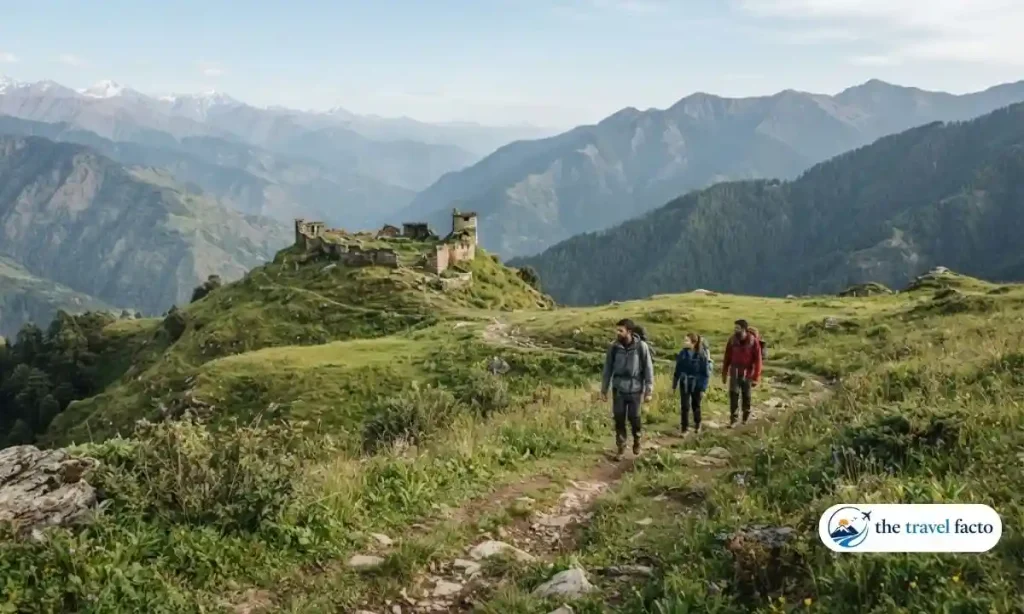
Another frequently visited trek from Jalori Pass is Raghupur Fort. The path goes through open meadows and mountainous terrain until it reaches the ruins of the former fortress. The major reward is the vista and not an intact fort.
| Raghupur Fort Details | Information |
| Starting point | Jalori Pass |
| Trek distance | Around 3 km one way |
| Difficulty | Moderate |
| Main attraction | Fort ruins and panoramic views |
| Best for | Trekkers and photographers |
| Suggested time | 4–5 hours including return |
| Food | Carry food/water |
| Facilities | Very limited |
| Stay nearby | Jibhi or Shoja |
| Weather concern | Fog, rain, and snow can affect visibility |
8. Visit Chhoie Waterfall

Chhoie Waterfall — An adventurous choice over the easily accessible Jibhi Waterfall You have to, quite literally, walk further over mountain terrain to get there — the journey is part of the experience. Surrounded by forest, the waterfall offers seclusion when conditions are calm.
| Chhoie Waterfall Details | Information |
| Type | Natural waterfall |
| Main activity | Trekking and sightseeing |
| Difficulty | Easy to moderate |
| Trail | Forest and mountain path |
| Best for | Nature and adventure lovers |
| Suggested time | 2–4 hours |
| Food | Carry water/snacks |
| Café | Better options back in Jibhi |
| Safety | Avoid slippery rocks |
| Monsoon | Extra caution required |
9. Enjoy the Tirthan River
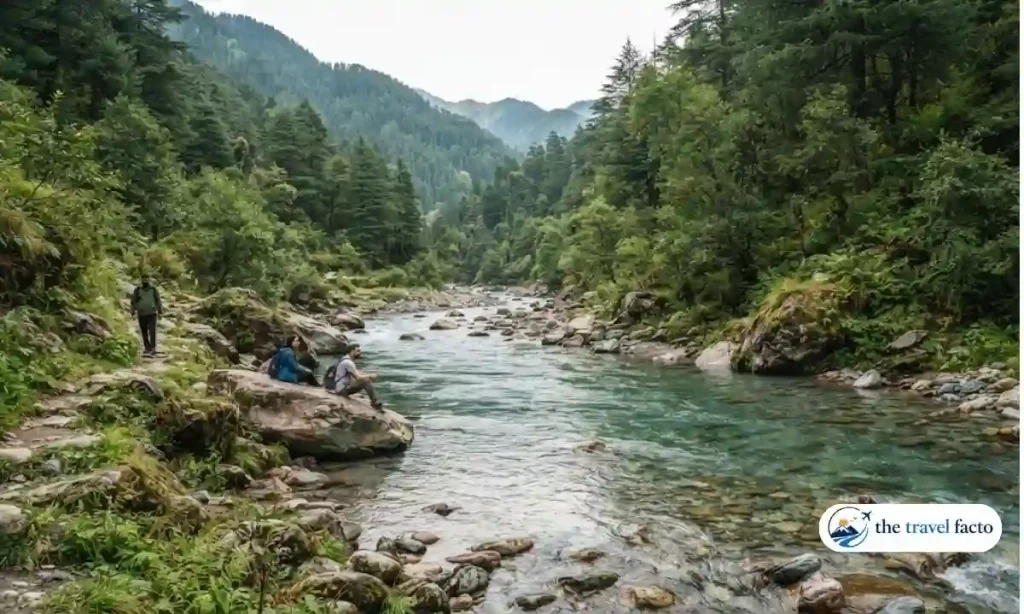
Tirthan River is among the main reasons that this valley has remained so peaceful. Do not think of the river as just another photo-op, take a stroll along side of it, sit at waters edge and observe or eat on riverside café. It is also linked with trout fishing in the river, which is a good activity for travelers looking for something more than sightseeing.
| Tirthan River Experience | Information |
| Main activities | Riverside walks, photography, and relaxation |
| Fishing | Available in regulated areas |
| Best for | Couples, families, and nature lovers |
| Difficulty | Easy |
| Suggested time | 1–3 hours |
| Café options | Good availability around Jibhi |
| Stay options | Many riverside/valley-view homestays |
| Safety | Stay away from strong currents |
| Best atmosphere | Morning and late afternoon |
Cafe Old School Jibhi, Skylight Garden Riverside Cafe &Homestay and Cafe Bela are some of the currently operational cafes listed in Jibhi for riverside café experience.
10. Try Trout Fishing
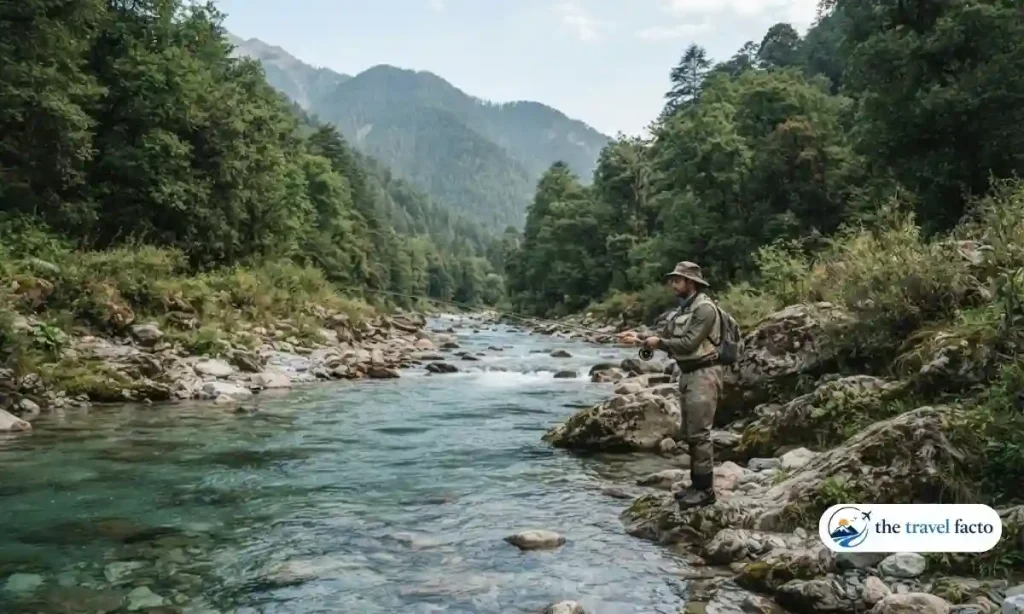
One of the more unique experiences you will find in Tirthan valley is trout fishing. It is not something visitors can just do anywhere they want along the rivers, as fishing is regulated and requires a license. At present, travel advisory directs travelers to the fisheries authorities for permits in Banjar/Larji areas.
| Trout Fishing Details | Information |
| Location | Tirthan River and permitted stretches |
| Fish | Trout |
| Permit | Required |
| Best for | Anglers and outdoor travelers |
| Difficulty | Easy to moderate |
| Equipment | Check local availability |
| Food | Carry essentials |
| Safety | Follow river and fishing rules |
| Important | Do not fish without required permission |
11. Explore Bahu Village and Local Himalayan Life

It is worth to ponder over Bahu Village if you want an experience of the quieter side of the valley. The legacy here is not in search of a major monument, but traditional households, agricultural landscapes, mountain views with some local life along the village lines as experience. This week you will play the surrounding area as well (if conditions allow for it road-wise and walking problem wise), where to your right there are many famous religious or cultural landmarks nearby.
| Bahu Village Experience | Information |
| Type | Himalayan village experience |
| Main attraction | Local lifestyle and scenery |
| Best for | Slow travelers and photographers |
| Activity | Village walk and photography |
| Difficulty | Easy |
| Suggested time | 1–2 hours |
| Food | Limited; plan meals in Jibhi/Banjar |
| Stay | Homestay options may be available |
| Tip | Respect private homes and local customs |
12. Explore Shoja Village
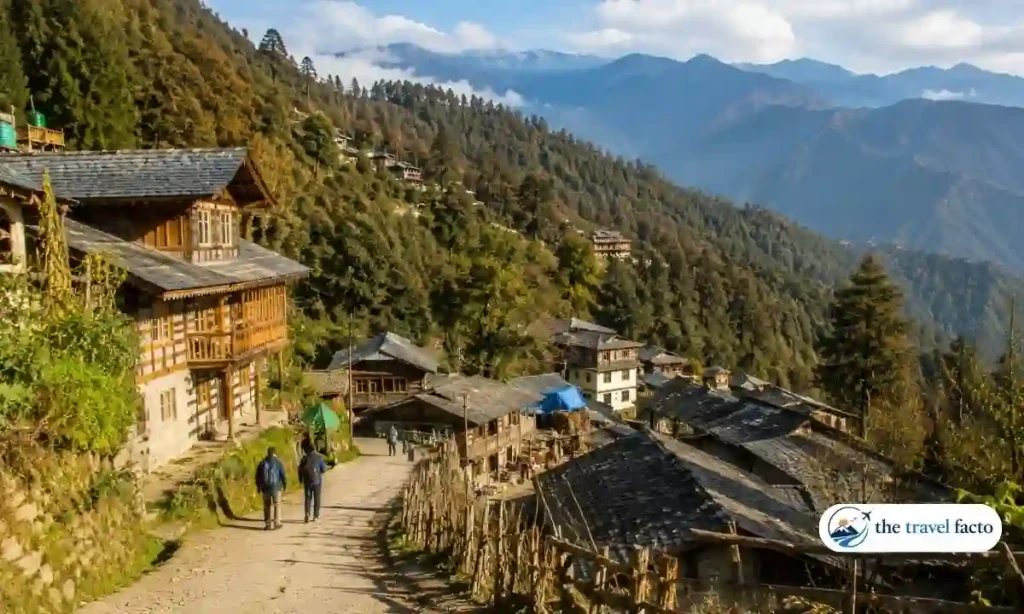
Shoja is a serene village in the mountains that especially appeals to those who seek forest vistas, gentle walks and a more relaxed stay. This climbing point is likewise strategically essential as a way to reach towards Jalori Pass & close by trekking tracks. According to Himachal Tourism, Shoja is a quiet sheltered place amid forest cover and treks leading to Jalori Pass and Serolsar Lake.
| Shoja Details | Information |
| Type | Mountain village |
| Main experience | Forest walks and peaceful stays |
| Best for | Couples, solo travelers, and nature lovers |
| Nearby attractions | Jalori Pass and trekking routes |
| Cafés | Small cafés/cafés attached to stays |
| Accommodation | Homestays and cottages |
| Suggested time | Half day to 1 day |
| Road | Mountain road |
| Best experience | Slow travel and nature |
13. Enjoy Forest Walks and Nature Trails
One of the major attractions of Jibhi is its woods. A slow walk away from named tourist attractions through these oaks and pines, deodars can be one of the best experiences of the trip. Some routes are soft, stepping pebbles towards villages and views, whilst some climb upwards steeply.
| Nature Walk Details | Information |
| Activity | Forest walking |
| Difficulty | Easy to moderate |
| Best time | Morning |
| Best for | Nature lovers and photographers |
| Duration | 30 minutes to several hours |
| What to carry | Water and comfortable shoes |
| Guide | Useful for unfamiliar longer routes |
| Food | Carry water/snacks |
| Safety | Avoid isolated trails after dark |
14. Explore the Great Himalayan National Park Area
It is very easy to get there so its also one of the most prominent natural attractions in the whole region i.e., Great Himalayan National Park. While Jibhi and Tirthan Valley serve as helpful staging grounds for visiting the park’s natural scenery and wildlife, travelers should be mindful of whether they are actually experiencing the valley or venturing into regulated national park or buffer areas. The specific permits, entry arrangements and whether or not a guide is required varies by region and zones so it is important to check current local rules before planning any treks in the protected area.
| GHNP Experience | Information |
| Type | Protected Himalayan ecosystem |
| Main experience | Trekking, nature, and wildlife |
| Best for | Nature lovers and serious trekkers |
| Difficulty | Route dependent |
| Permit | May be required |
| Guide | Recommended/required for some routes |
| Food | Carry packed food |
| Facilities | Limited inside trails |
| Stay | Jibhi/Tirthan/Sai Ropa options |
| Safety | Follow forest and wildlife rules |
15. Visit Shangchul Mahadev Meadow
Shangchul Mahadev Meadow offers a different kind of Himalayan scenery, with open green landscapes replacing the dense forest setting found around Jibhi. It is better suited to travelers who have additional time and want to explore the wider valley rather than limiting their trip to the main Jibhi attractions.
| Shangchul Meadow Details | Information |
| Type | Mountain meadow and cultural site |
| Main attraction | Open mountain landscape |
| Best for | Photography and nature |
| Difficulty | Route dependent |
| Suggested time | Half day or more |
| Food | Carry essentials |
| Café | Limited at the site |
| Stay | Return to Jibhi/nearby village |
| Weather | Check before traveling |
16. Spend Time in Jibhi Cafés
Cafés are not just a place to eat in Jibhi; they have become part of the destination’s slow-travel culture. You can spend an afternoon with tea or coffee, enjoy simple meals, work remotely where Wi-Fi is available, or simply sit beside the river and watch the valley. There are currently numerous cafés in and around Jibhi, although opening hours and menus can change seasonally. The wider Jibhi area has a much stronger café culture than many remote Himalayan villages.
| Café Experience | Information |
| Best for | Couples, solo travelers, and remote workers |
| Popular food | Tea, coffee, breakfast, snacks, and meals |
| Views | River, forest, and valley depending on café |
| Wi-Fi | Available at some cafés/stays |
| Seating | Indoor and outdoor options vary |
| Payment | Digital payments vary; carry some cash |
| Best time | Late morning to evening |
| Tip | Check opening hours during off-season |
17. Stay in a Wooden Homestay or Cottage
A stay in Jibhi can be an experience in itself. Wooden cottages, homestays, and small hostels fit naturally into the mountain environment and are often better suited to the destination’s slow-travel character than a conventional city-style hotel. For budget travelers, hostel and homestay options are available, while couples and families can look for private cottages with balconies, valley views, heating, and attached bathrooms.
| Stay Type | Approx. Budget | Facilities to Look For |
| Hostel/dorm | ₹500–₹1,200+ | Dorm bed, common area, Wi-Fi |
| Budget homestay | ₹1,200–₹2,500+ | Room, hot water, meals often available |
| Mid-range cottage | ₹2,500–₹5,000+ | Private room, balcony/view, heating |
| Premium cottage/treehouse | ₹4,000+ | Private space, views, upgraded facilities |
| Riverside stay | Varies | River/valley view, café/restaurant |
| Family homestay | Varies | Meals, local guidance, larger rooms |
For example, Whoopers Hostel Jibhi offers a hostel-style option in Jibhi, while The Rustic Jibhi | Backpackers Hostel is another budget-oriented stay option. For a more private stay, travelers can look at places such as Jibhi Highness or Khwabeeda Stays, Jibhi. Facilities vary by property, so confirm heating, hot water, parking, Wi-Fi, and meal availability before booking.
18. Go Camping and Stargazing
Camping is a great option for travelers who want to experience Jibhi after the day’s sightseeing is over. A quiet campsite surrounded by forest and mountain scenery can provide a very different experience from simply staying in a hotel. However, camping should be done through an authorized campsite rather than setting up tents randomly in forest or protected areas.
| Camping Details | Information |
| Experience | Outdoor overnight stay |
| Best for | Couples, groups, and adventure travelers |
| Activities | Stargazing, bonfire, and nature |
| Best season | Clear and relatively dry weather |
| Facilities | Campsite dependent |
| Food | Usually campsite dependent |
| Safety | Use authorized campsites |
| What to carry | Warm clothes and personal essentials |
19. Explore Jibhi Market and Local Culture
Jibhi Market is small compared with markets in Manali or Shimla, but it is useful for basic supplies, snacks, and everyday travel needs. The larger town of Banjar is more useful when you need broader shopping, pharmacies, banking, and other services. Current travel information identifies Banjar as an important nearby service center.
| Requirement | Where to Look |
| Snacks | Jibhi Market |
| Basic groceries | Jibhi/Banjar |
| Pharmacy | Banjar is better for wider options |
| ATM/banking | Banjar |
| Fuel | Banjar/route-dependent |
| Local food | Jibhi cafés and homestays |
| Local products | Village shops and markets |
| Trek supplies | Buy before leaving for remote routes |
20. Enjoy the Slow Jibhi Experience
Perhaps the best thing to do in Jibhi is not to plan every hour. Sit beside the river, drink tea, walk through the forest, talk with local residents, read a book on a balcony, or simply watch the clouds move across the hills. This slower style of traveling is one reason Jibhi has become popular among couples, solo travelers, and remote workers. The village has enough cafés, stays, and natural surroundings to make a longer stay enjoyable without needing a new sightseeing spot every few hours.
| Slow Travel Activity | What You Can Do |
| Riverside time | Sit, walk, and photograph |
| Café hopping | Try local cafés |
| Village walk | Explore local surroundings |
| Forest walk | Enjoy quiet trails |
| Balcony stay | Relax with valley views |
| Local food | Try Himachali dishes |
| Reading | Spend a quiet afternoon |
| Photography | Capture forests and village life |
Things to Do in Jibhi for Couples
Jibhi is particularly attractive for couples because its best experiences are naturally slow and scenic. Instead of filling the itinerary with commercial attractions, couples can combine a waterfall walk, riverside café, forest trail, scenic stay, and one longer excursion such as Jalori Pass or Serolsar Lake.
| Couple Experience | Why It Works |
| Jibhi Waterfall | Short nature walk |
| Riverside café | Relaxed atmosphere |
| Forest walk | Quiet and scenic |
| Wooden cottage stay | Mountain experience |
| Jalori Pass | Scenic road trip |
| Serolsar Lake | Shared trekking experience |
| Sunset/valley views | Photography and relaxation |
| Local dinner | Slow evening |
Things to Do in Jibhi with Family
Families can enjoy Jibhi without taking on difficult treks. Jibhi Waterfall, village walks, cafés, riverside areas, and nearby temples are easier choices. Longer treks such as Serolsar Lake or Raghupur Fort should be chosen according to children’s age, fitness, and weather.
| Family Activity | Difficulty | Suitable For |
| Jibhi Waterfall | Easy | Most families |
| Shringa Rishi Temple | Easy | Families |
| Riverside walk | Easy | Families with children |
| Café visit | Easy | All ages |
| Village walk | Easy | All ages |
| Chehni Kothi | Moderate | Older children/adults |
| Serolsar Lake | Moderate | Fit families |
| Raghupur Fort | Moderate | Older children/adults |
Best Adventure Activities in Jibhi
Jibhi and the surrounding Tirthan Valley offer a mixture of easy and moderate outdoor experiences. The most popular include trekking to Serolsar Lake and Raghupur Fort, the Chehni Kothi trail, waterfall walks, camping, and regulated trout fishing.
| Activity | Difficulty | Approx. Experience |
| Jibhi Waterfall walk | Easy | Short forest walk |
| Chehni Kothi trek | Easy–moderate | Heritage + forest |
| Serolsar Lake trek | Easy–moderate | High-altitude forest trek |
| Raghupur Fort trek | Moderate | Meadow + mountain views |
| Chhoie Waterfall | Easy–moderate | Forest adventure |
| Trout fishing | Easy–moderate | Permit-based |
| Camping | Easy–moderate | Outdoor overnight stay |
| GHNP trekking | Route dependent | Nature/wildlife |
Best Time to Visit Jibhi
Jibhi can be visited in different seasons, but the experience changes considerably. Spring and early summer are pleasant for village walks and sightseeing, while autumn is particularly attractive for clear mountain views. Monsoon brings lush greenery and stronger waterfalls but also increases the risk of slippery trails and road disruption. Winter can bring snow and very cold conditions. More importantly, higher routes such as Jalori Pass can become inaccessible because of snow. Himachal Tourism notes that Jalori Pass generally remains closed to traffic during the snowier winter period.
| Season | Months | What to Expect |
| Spring | March–April | Pleasant weather, greenery, and blossoms |
| Summer | May–June | Comfortable sightseeing and trekking |
| Monsoon | July–September | Lush scenery and stronger waterfalls; rain risk |
| Autumn | October–November | Clearer skies and good trekking conditions |
| Winter | December–February | Cold, possible snow, and access restrictions |
How to Reach Jibhi
Jibhi is primarily a road destination. The usual road approach passes through the Kullu/Aut side and Banjar, with Jibhi connected through NH-305. Banjar is the nearest important town for many everyday services.
| Mode | Information |
| By Road | Most convenient option |
| From Banjar | Around 10 km |
| From Kullu/Bhuntar side | Road journey through mountain routes |
| Nearest airport | Bhuntar/Kullu Airport |
| By Train | Reach a suitable railway station and continue by road |
| Local transport | Taxi/private vehicle and limited bus services |
| Best option for sightseeing | Private taxi/self-drive with experienced hill driver |
Jibhi Hotels, Homestays, and Accommodation
Jibhi has a wide range of accommodation for a small mountain destination. You can find budget hostels, family-run homestays, wooden cottages, treehouses, and more private stays. Many travelers prefer properties with balconies, forest/river views, and in-house meals.
Cafes and Food in Jibhi
Jibhi has developed a strong café culture, especially around the main village and riverside areas. You can find coffee, tea, breakfast, snacks, simple Indian meals, and a variety of traveler-friendly dishes. Some currently listed local options include Cafe Bleeblu, Neti Neti Cafe, Cafe Old School Jibhi, Cafe Bela, and Polka Cafe.
| Food/Café Need | What to Expect |
| Breakfast | Eggs, parathas, sandwiches, pancakes, and café-style options vary |
| Tea/Coffee | Widely available |
| Indian food | Available at cafés/homestays |
| Local food | Ask specifically for Himachali dishes |
| Riverside dining | Available at selected cafés |
| Wi-Fi | Available at some cafés |
| Work-friendly seating | Available at selected cafés |
| Payment | Digital payment availability varies |
| Best tip | Check current opening hours and menu |
Jibhi Travel Budget
Your total budget will depend mainly on accommodation, transport, and whether you choose paid activities or longer taxi trips. Backpackers staying in hostels and using shared/local transport can keep costs lower, while couples choosing private cottages and taxis will spend more.
| Expense | Budget Traveller | Comfortable Traveller |
| Stay per night | ₹500–₹1,500+ | ₹2,500–₹5,000+ |
| Food per day | ₹400–₹800+ | ₹800–₹1,500+ |
| Local transport | Variable | Higher with private taxi |
| Activities | Mostly low-cost | Depends on activities |
| Camping | Operator dependent | Operator dependent |
| Trekking | Often low-cost | Guide/transport may add cost |
| Overall | Depends on trip style | Depends on stay + taxi |
Entry Fees and Activity Charges in Jibhi
There is no standard tourist ticket for natural attractions in and around Jibhi, but costs can apply for transport, organized activities, campsites and guides, permits as well as protected-area access. You must have the right type of trout-fishing licence; certain routes, especially in protected areas.
| Attraction/Activity | Typical Charge Situation |
| Jibhi Waterfall | Usually no major tourist entry ticket |
| Mini Thailand | Check current local access |
| Temples | Generally no standard tourist ticket |
| Chehni Kothi | Usually travel/guide cost rather than a major entry ticket |
| Jalori Pass | No standard attraction ticket; transport costs apply |
| Serolsar Lake | Trek itself generally low-cost; transport/guide may apply |
| Raghupur Fort | Trek/transport cost |
| Trout fishing | Permit required |
| GHNP | Entry/permit/guide rules depend on zone |
| Camping | Campsite-specific charge |
Things to Carry for a Jibhi Trip
Packing should be practical, not excessive since many of Jibhi’s best experiences revolve around walking or mountain roads.
| Item | Why You Need It |
| Comfortable trekking shoes | Forest and mountain trails |
| Light jacket | Weather can change quickly |
| Rain jacket | Useful during monsoon |
| Water bottle | Important during treks |
| Small backpack | Day excursions |
| Power bank | Useful in remote areas |
| Cash | Helpful at small shops |
| Basic medicines | Remote-area preparedness |
| Sunscreen | High-altitude sun exposure |
| Torch | Useful after dark |
| Identity documents | Hotel/check-in and permits |
Jibhi Travel Tips and Safety
There is more flexibility to mountain holidays than there is for a city. A route that is straight-forward in ideal conditions can become difficult when wet, while snow makes higher altitude routes impossible. If heading to Jalori Pass / lengthier trek, consult weather & native street circumstances first. Just because your photo comparison makes a location look calm doesn’t mean that fast-flowing river water in it is safe! Do not, as at waterfalls and natural pools, climb on unstable rocks. Observe permit rules and conservation laws for fishing and protected areas.
| Safety Tip | Why It Matters |
| Check weather before trekking | Conditions change quickly |
| Check Jalori Pass access | Snow can close the route |
| Wear proper shoes | Trails can be slippery |
| Carry water | Shops are limited on trails |
| Avoid river swimming | Currents can be unpredictable |
| Carry cash | Small businesses may not always accept cards |
| Respect local culture | Important around temples/villages |
| Do not litter | Protects the valley |
| Avoid night trekking | Limited visibility |
| Use local guides when needed | Helpful on unfamiliar trails |
2-Day Jibhi Itinerary
With the right planning two days are sufficient for a decent introduction to Jibhi
| Day | Morning | Afternoon | Evening |
| Day 1 | Jibhi Waterfall | Shringa Rishi Temple + village exploration | Riverside café and relaxed evening |
| Day 2 | Jalori Pass | Serolsar Lake or Raghupur Fort | Return to Jibhi and dinner |
3-Day Jibhi Itinerary
Three days gives you the slow down and heritage otherwise a waterfall experience without rushing.
| Day | Morning | Afternoon | Evening |
| Day 1 | Jibhi Waterfall | Mini Thailand/local village walk | Café hopping |
| Day 2 | Jalori Pass | Serolsar Lake | Return and rest |
| Day 3 | Chehni Kothi | Chhoie Waterfall or Tirthan River | Local dinner and relaxed evening |
Is Jibhi Worth Visiting?
First one is Yes, if you wish to have peaceful time in himalayas and nature matters more than commercial entertainment; Jibhi offers a quick reach from the highway with its small approachable waterfall, an innate architecture that steeps you back a century, forest trails for some gentle exercise, high-altitude treks, riverside cafés and homestays and nearby villages all packed into a relatively small space. The main benefit is that you can adapt the trip based on your travelling style. A family can plan around Jibhi Waterfall, temples, cafes and short strolls, a couple may target a wooden cottage, riverside meals and lovely trails while an adventure traveller has the flexibility of planning per Jalori Pass, Serolsar Lake, Raghupur Fort and long hikes.
FAQs
What are the best things to do in Jibhi?
The most popular experiences include visiting Jibhi Waterfall, exploring Chehni Kothi, driving to Jalori Pass, trekking to Serolsar Lake and Raghupur Fort, visiting Shringa Rishi Temple, enjoying the Tirthan River, trying regulated trout fishing, and spending time in local cafés.
How many days are enough for Jibhi?
Two days are enough for the main attractions, while three days are better if you want to include longer treks, Chehni Kothi, waterfalls, and relaxed café or riverside time.
Is Jibhi good for couples?
Yes. Jibhi is particularly suitable for couples who enjoy peaceful stays, forest walks, riverside cafés, scenic drives, and moderate trekking.
Is Jibhi good for families?
Yes. Families can enjoy Jibhi Waterfall, temples, village walks, cafés, and easy nature experiences. More demanding treks should be selected according to fitness and weather.
Is Jibhi Waterfall free to visit?
The waterfall is generally treated as a natural attraction without a major standard tourist entry ticket, but local access arrangements can change.
Conclusion
Jibhi is not the place where you have to be running from one attraction spot to another. The true beauty of it lies in amalgamating waterfalls, woodlands, webs of comforting rivers, simple villages, grand heritage architectures, mountain trekking trips, quaint cafés and pristine stays to form an intertwined rural Himalayan experience. For a first time visit, begin with Jibhi Waterfall + Shringa Rishi Temple, chilling around Tirthan River + local cafés and then dedicate an entire day to Jalori Pass with Serolsar Lake or Raghupur Fort. If there is a day more for you, add Chehni Kothi or Chhoie Waterfall. This way offers a much more enjoyable experience than attempting to cover every single nearby ATTRACTION in the shortest time possible. If your idea of a holiday is waking up to mountain views, walking through forests, tea beside a river and ending in quiet wooden homestay, Jibhi is that one place where the stay itself becomes part of the destinations
Also, Read About: Things to Do in Lansdowne: 15 Best Places & Activities for a Memorable Trip